

Today’s families look different than they did a generation ago. Dual-income households are common. Parenting roles are evolving. Gender stereo types are dissolving. Couples—straight, queer, married, unmarried- are redefining what partnership means at home.
And yet, one thing hasn’t changed much: household management still tends to rely on memory, reminders, and assumptions rather than shared systems. When responsibility lives in one person’s head, even the most loving relationships can feel strained.
Household stress isn’t a personal failure; it’s a system gap. Aligna turns household management into a shared, visible system, so planning, ownership, and follow-through are aligned.
The Hidden Cost of Unequal Mental Load
Mental load isn’t just about doing household tasks; it’s about anticipation of tasks and constant mental juggle. It’s the constant background thinking: tracking school schedules, summer camp enrollment, noticing when groceries run low, anticipating appointments, planning meals, and making sure nothing falls through the cracks. In many families, this invisible work quietly rests with one partner, even when responsibilities appear “shared” on the surface.
Over time, this imbalance creates more than exhaustion. It breeds resentment. When one partner becomes the default manager of home life, emotional energy gets drained and family connection suffers. Small oversights start to feel personal. Conversations turn into stress. Emotional distance grows not because of a lack of care, but because one person is carrying too much on their own.
Appreciation helps, but it doesn’t resolve the root cause. Saying “thank you” or acknowledging effort goes a long way but it still doesn’t actually redistribute responsibility. Without structural change, clear ownership, shared planning, and visible systems, the mental load remains uneven. True balance at home isn’t just about acknowledgment; it’s about creating a shared framework where responsibility is felt and managed together.
From “Helping” to Shared Ownership
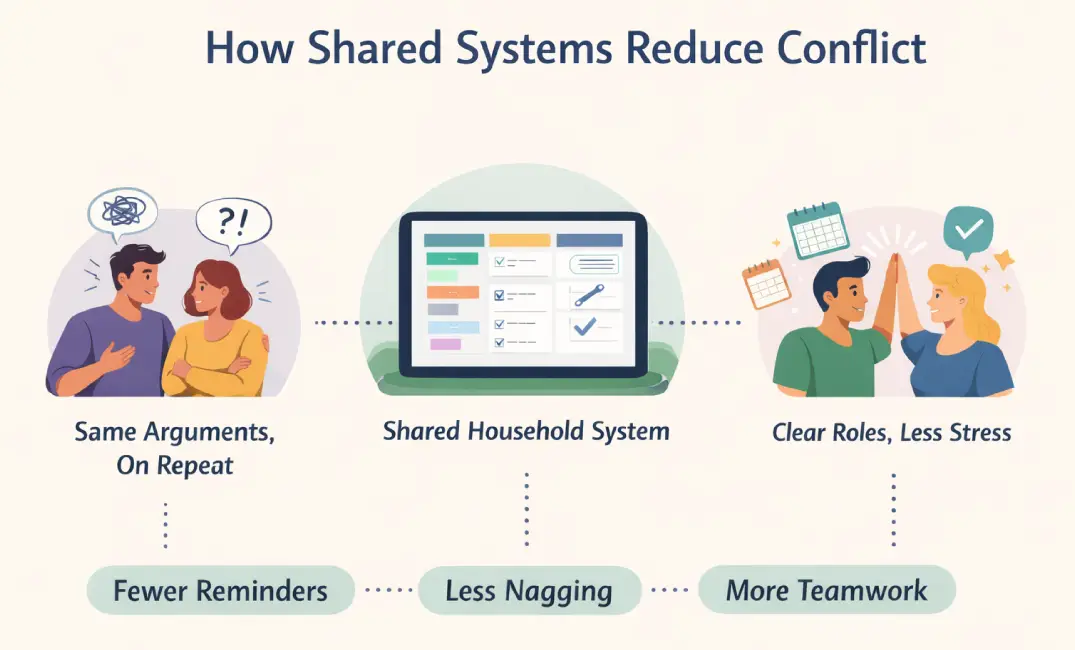
In many households, partnership still sounds like, “Just tell me what to do.” While well-intentioned, this mindset places the burden of planning, prioritizing, and remembering on one person. It turns shared life into a manager-assistant dynamic, where one partner carries the mental load, and the other waits for instructions.
Assistance is task-based and reactive. Accountability is ownership-based and proactive. When responsibilities are truly shared, both partners understand what needs to happen, why it matters, and when it needs attention, without constant reminders. This shift reduces friction, removes guesswork, and creates space for trust to grow.
Shared household management isn’t about control or perfection. It’s about clarity. When roles, expectations, and follow-through are visible, respect becomes mutual rather than negotiated. Alignment comes from clarity, not reminders, and that clarity fosters real partnership.
Emotional Benefits of Shared Household Management
When household responsibilities are managed together, something subtle but powerful shifts emotionally. Trust grows, not because tasks are completed perfectly, but because both partners know they can rely on each other. When ownership is shared, follow-through becomes predictable, and reliability stops feeling like a personal favor and starts feeling like a mutual commitment.
Shared household management also creates a deep sense of being seen and supported. When mental load is visible and fairly distributed, partners no longer have to explain, justify, or remind constantly. Emotional energy that once went into managing logistics can instead be invested in listening, empathy, and presence.
For parents, this balance is especially impactful. When one person isn’t carrying the bulk of planning and coordination, burnout eases. There’s more patience, more emotional availability, and more room to show up fully, not just as caregivers, but as partners and individuals.
Over time, these changes reshape the relationship itself. Silent frustrations fade because expectations are clear. A stronger teamwork mindset replaces scorekeeping. And with less cognitive clutter, couples find more space for intimacy, lightness, and joy; the kind that comes from feeling aligned, not overwhelmed.
Small Shifts That Create Big Relationship Wins
Strengthening relationships at home doesn’t require a complete reset. Often, it starts with small, intentional shifts that make everyday life easier to share. The first step is making invisible work visible; acknowledging the planning, remembering, and coordinating that keep a household running, not just the tasks that get checked off.
Documenting responsibilities instead of assuming them is another powerful change. When roles live in shared space rather than in someone’s memory, expectations become clearer, and misunderstandings decrease. It removes the need for reminders and replaces them with shared awareness.
Finally, roles don’t have to be fixed. Families evolve, schedules change, and energy levels fluctuate. Regularly reviewing and adjusting responsibilities helps households stay aligned as life shifts, without resentment or silent overload.
The goal isn’t perfection. It’s progress. Even small steps toward clarity and shared ownership can create meaningful improvements in trust, teamwork, and connection.
How Aligna Supports Household Alignment (Without Guilt or Pressure)
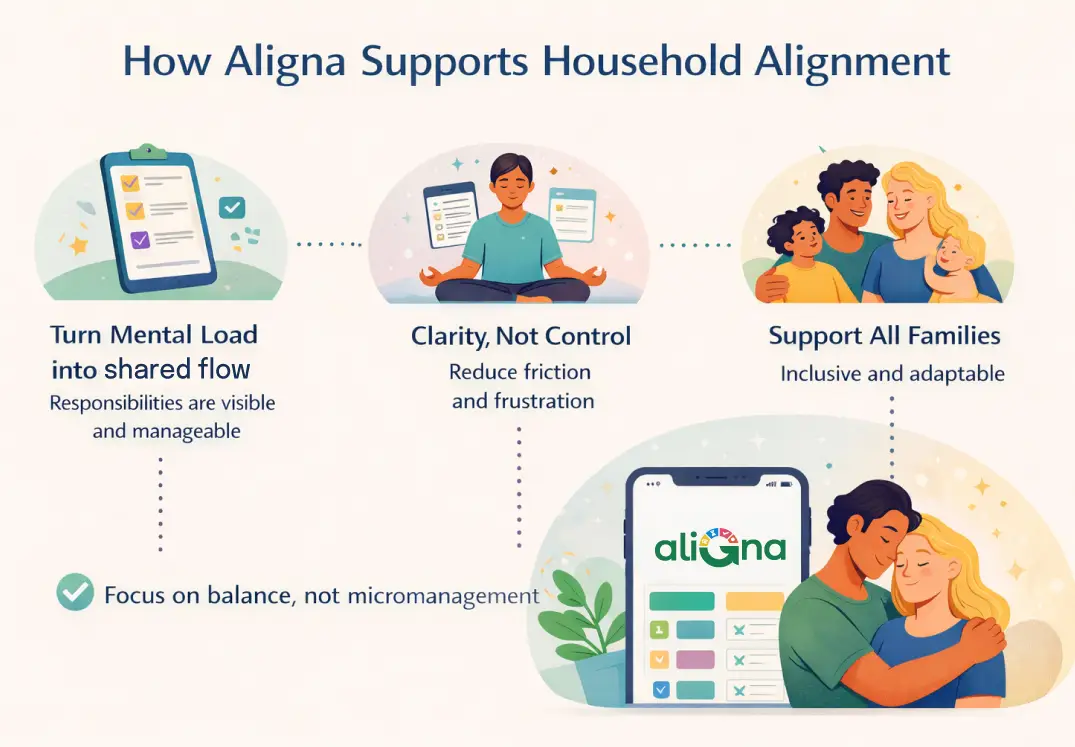
Aligna is being built to remove the emotional weight from household management, not add to it. By turning mental load into visible, shared flow, Aligna helps families move planning, tracking, and ownership out of one person’s head and into a shared space everyone can see and contribute to.
Instead of relying on reminders or constant follow-ups, Aligna creates calm through clarity. Responsibilities, timelines, and expectations are clear, reducing friction and decision fatigue. There’s no need for control or correction; just a shared understanding of what needs attention and who owns it.
Most importantly, Aligna supports families beyond traditional roles. It’s built for all family structures, rhythms, and dynamics, recognizing that alignment looks different for everyone. The focus isn’t on micromanagement or perfection, but on balance, fairness, and shared responsibility.
With Aligna, household management becomes less about managing people and more about supporting partnerships.
Healthy relationships aren’t defined by who works harder; they’re shaped by how clearly responsibility is shared. When household management shifts from assumptions to alignment, everyday life feels lighter. Fewer things fall through the cracks. Less resentment builds silently. And partners can show up for each other with more patience, presence, and trust.
Shared systems don’t replace love or communication; they support them. By making mental load visible and ownership collective, families create space for what truly matters: connection, calm, and mutual respect.
Ready to turn everyday overwhelm into shared alignment? Discover how Aligna helps families manage life together; with clarity, not conflict.