

You care deeply for your partner, yet still hear, “You don’t understand me.”
It’s frustrating and even hurtful when you know your intentions are genuine. But what if the issue isn’t a lack of love at all? What if it’s simply that you and your partner are expressing and receiving love in completely different ways?
This is where the idea of love languages begins, not as a rulebook for relationships, but as a gentle lens to understand emotional needs more clearly.
What Are Love Languages?
Love languages are simply different ways people express and experience care, appreciation, and emotional connection. While we often assume that love should be felt the same way by everyone, the reality is that each person tends to value certain gestures more than others. For some, words of reassurance create a deep sense of closeness. For others, spending uninterrupted time together or receiving thoughtful actions may feel more meaningful.
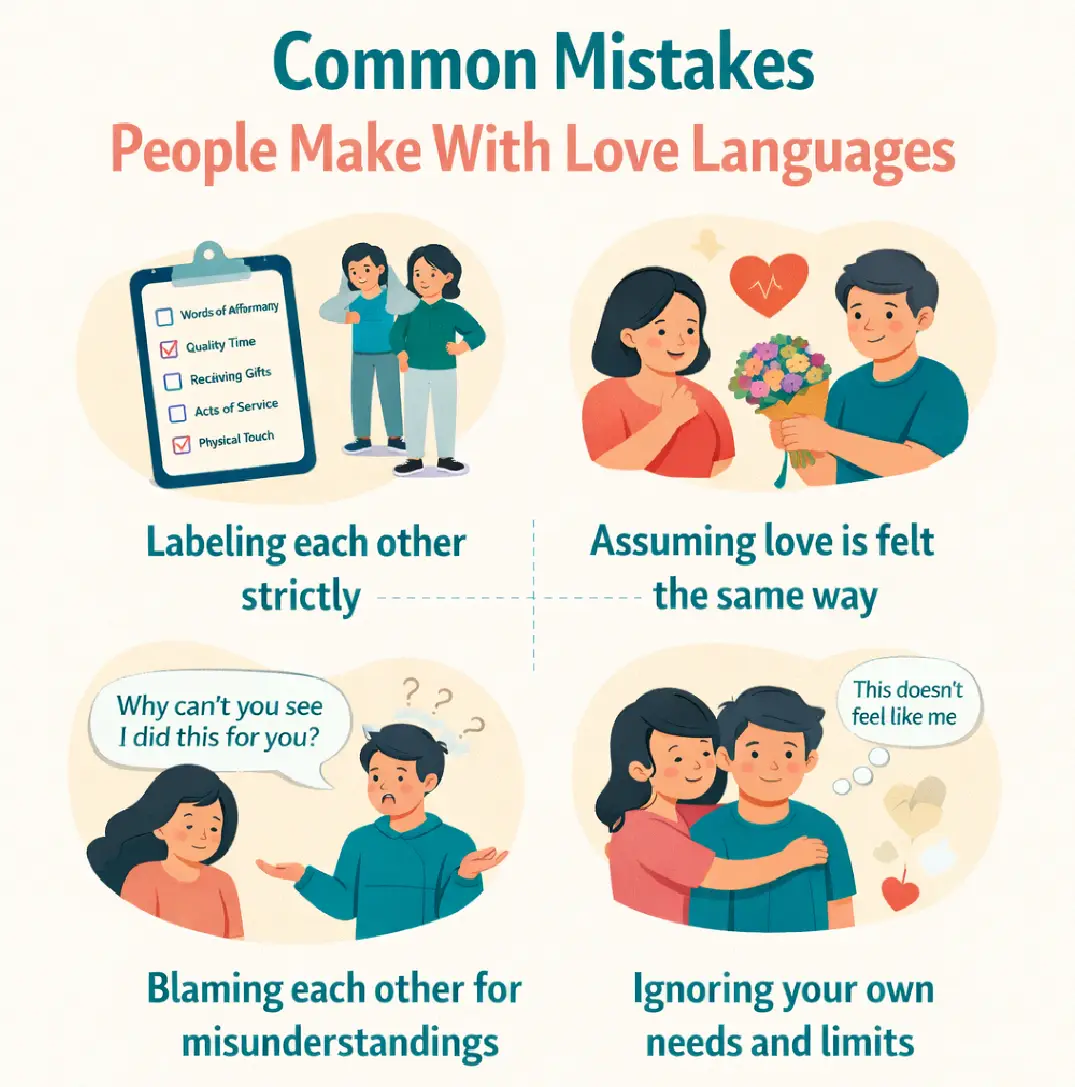
The idea of love languages isn’t meant to label people or put relationships into fixed categories. Instead, it offers a gentle framework to understand why one person might feel deeply loved through small acts, while another might need verbal affirmation or physical presence to feel secure.
At its core, understanding love languages helps shift the focus from “Why don’t they see my effort?” to “How can we better understand each other’s emotional needs?”
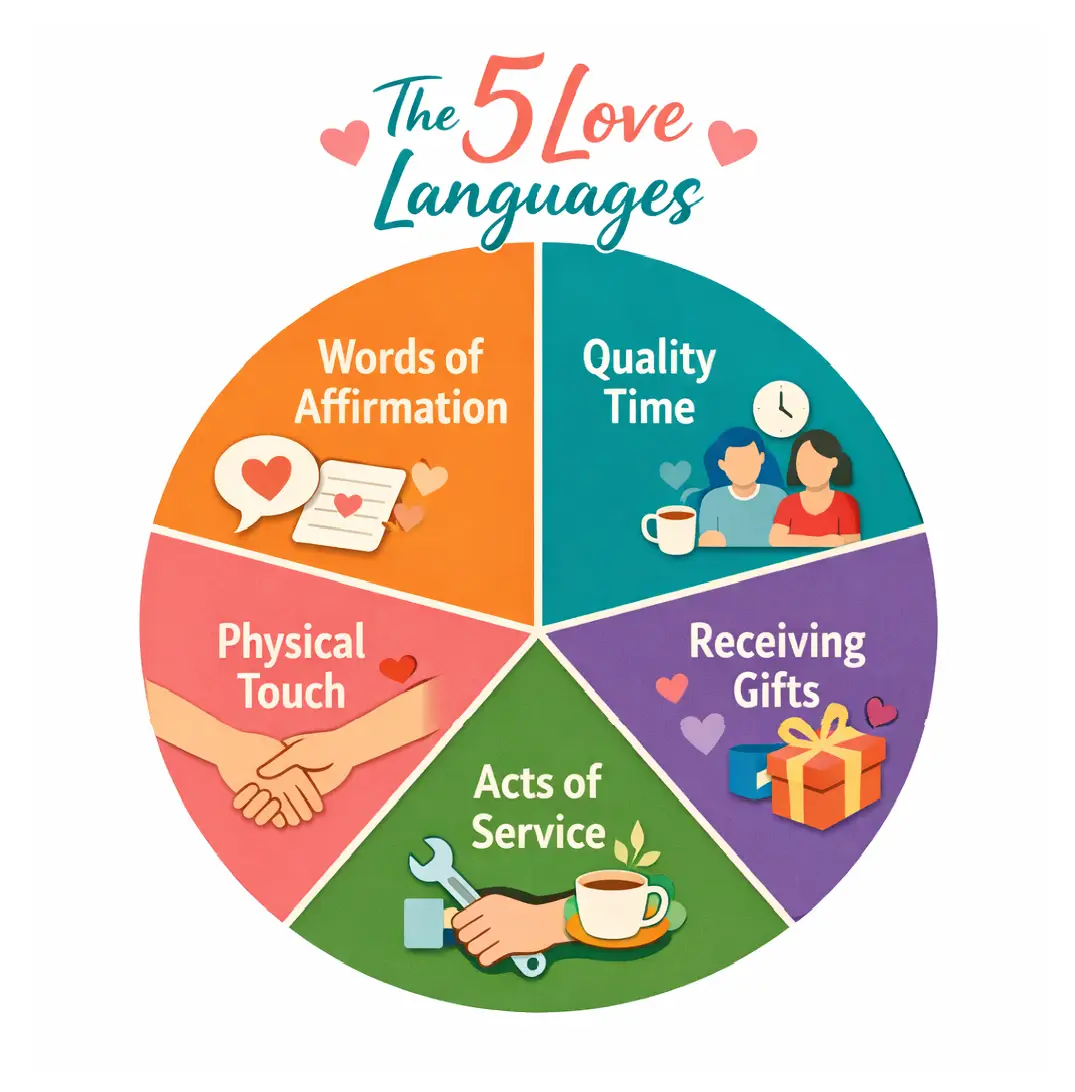
The 5 Love Languages Explained
Everyone experiences connection differently, and love languages help describe the ways people most naturally give and receive care. These aren’t personality types; they’re emotional preferences that shape how appreciation and closeness are felt in everyday life.
Words of Affirmation: For some, spoken or written words carry deep emotional weight. Encouragement, appreciation, reassurance, or even small compliments can make them feel valued and secure. It’s not just about saying “I love you,” but about expressing emotional presence through language. Tone, timing, and sincerity often matter more than grand speeches.
Example: Sending a message like “I know you were very busy today, but thank you for handling X today” or acknowledging small efforts during a busy week.
Quality Time: Quality time is about being fully present; not just physically together, but emotionally engaged. Meaningful conversations, shared activities, or even quiet moments without distractions help strengthen the connection. For those who value this love language, attention feels like affection, and consistent presence builds emotional safety.
Example: Putting phones away during dinner and having an uninterrupted conversation, or planning a short walk together just to catch up.
Receiving Gifts: This love language is less about material value and more about thoughtfulness and intention. A small, meaningful gesture can symbolize being remembered and cared for. The emotional meaning behind the gift, “I thought of you,” often holds more importance than the gift itself.
Example: Getting them a souvenir from a trip or gifting something small that reminds them of an inside joke.
Acts of Service: Helping with chores, sharing responsibilities, solving problems, or easing their load can feel deeply loving to people who resonate with these acts. These gestures communicate support, reliability, and partnership, especially during stressful or busy periods.
Example: Making coffee for them after a long day, handling a task they’ve been stressed about, or stepping in to help without being asked.
Physical Touch: Physical closeness can create a strong sense of comfort and reassurance. This might include hugs, holding hands, a gentle touch, or simply sitting close together. It’s less about romance alone and more about feeling emotionally grounded and connected through safe, respectful physical presence.
Example: A comforting hug after a tough day or holding hands during a peaceful moment together.
Understanding these five love languages isn’t about choosing one “right” way to love. Most people experience a mix of them, and preferences can shift over time. The goal is simply to become more aware of how different expressions of care can shape how loved and understood we feel.
How to Identify Your Own Love Language?
Understanding your love language starts with simple self-awareness. Instead of asking only “How do I show love?” try noticing what makes you feel most valued, appreciated, or emotionally safe. Often, the things that hurt us the most when missing, like lack of appreciation, time, support, or affection, can reveal what we truly need to feel connected. You can begin by reflecting on a few questions:
- What gestures make you feel instantly seen or cared for?
- What do you naturally do for people when you love them?
- When do you feel most disconnected or misunderstood?
Sometimes it’s hard to figure this out on your own, which is why structured tools can help. We’ve created a Love Language quiz on our resource page, giving you a simple starting point to explore your emotional preferences. You can take the test here: (link) and then come back to this guide to cross-check your results with the explanations above.
Remember, this quiz isn’t meant to label you; it’s just a reflection tool. Your love language can evolve with life experiences, relationships, and emotional growth. The goal isn’t to fit into one category perfectly, but to understand yourself a little more clearly so your needs can be expressed with honesty and compassion.
How to Start Speaking Your Partner’s Love Language?
Speaking your partner’s love language doesn’t mean changing who you are; it’s about being more intentional with how you show care. Start by noticing what makes them feel valued. Do they appreciate meaningful conversations, thoughtful actions, or physical closeness? Small observations can help you understand what matters most to them.
Open conversations also make a difference. Asking simple questions like “What makes you feel supported?” can bring clarity without pressure. Focus on small, consistent efforts rather than grand gestures, whether that’s giving undivided attention, offering help during stressful moments, or expressing appreciation more often.
Most importantly, it should feel mutual and natural. The goal isn’t perfection, but creating a space where both partners feel understood and emotionally connected.
Love isn’t always about doing more; sometimes it’s about understanding how our partners and we feel cared for. When we become more aware of different love languages, small shifts in communication and everyday actions can create a deeper emotional connection. Instead of guessing what your partner needs, you begin to approach relationships with more clarity, empathy, and intention.
If you’re curious to explore your own emotional preferences, we invite you to take our Love Language Quiz on the resource page.
Take the Love Language Quiz here: https://forms.gle/US8RtDmj7vtRjbed8