


Tax preparation doesn’t just live in spreadsheets.
It lives in your head.
It’s the quiet reminders you carry while doing everything else. The mental checklist of documents, deadlines, passwords, receipts, and conversations that somehow never makes it onto anyone else’s radar. While taxes look like a once-a-year task on paper, the planning behind them often becomes an invisible, ongoing responsibility, and for many households, one person ends up carrying most of that weight.
This is the part of tax season people rarely talk about: the mental load. The thinking, organizing, and emotional energy that happens long before anything gets filed.
The good news? You don’t have to hold all of it alone. With the right systems and even simple AI prompts, it’s possible to turn overwhelm into structure and silent stress into shared clarity.
What Is the “Mental Load” of Tax Preparation?
Tax preparation isn’t just about forms and numbers; it’s about everything that happens before filing even begins. The mental load is the invisible work of remembering deadlines, tracking documents, coordinating with family members, and constantly thinking about what’s left to do.
Often, one person becomes the silent “planner,” holding reminders in their head, chasing paperwork, and making decisions behind the scenes. Even when you’re not actively working on taxes, your mind keeps running in the background, with tabs open to anticipate problems and manage timelines.
Because this effort isn’t always visible, it can feel heavier than the actual filing itself. Recognizing this mental load is the first step toward creating systems and support that make tax season feel more shared and less overwhelming.
Why Tax Prep Feels Heavier Than It Should?
Tax preparation isn’t always difficult because of the numbers; it feels heavy because of the constant decisions, responsibilities, and pressure surrounding it. What looks like a simple annual task often becomes mentally exhausting for a few key reasons.
Decision fatigue plays a big role. From choosing deductions to deciding what to prioritize first, the stream of small choices can drain your energy long before the work is finished.
There’s also often a role imbalance in households, where one person naturally takes on the planning and coordination. When responsibilities aren’t clearly shared, the mental burden quietly grows on one side.
Add to that information overload, endless articles, changing rules, and conflicting advice, and it becomes harder to know where to start or what actually matters. This uncertainty can lead to a fear of making mistakes, which slows progress and increases stress.
And then comes last-minute pressure. When tasks pile up or get delayed, tax prep shifts from a manageable process to a rushed, high-stakes deadline, making everything feel heavier than it really needs to be.
Understanding these factors helps reframe tax season, not as a personal failure to stay organized, but as a system that needs better support, structure, and shared responsibility.
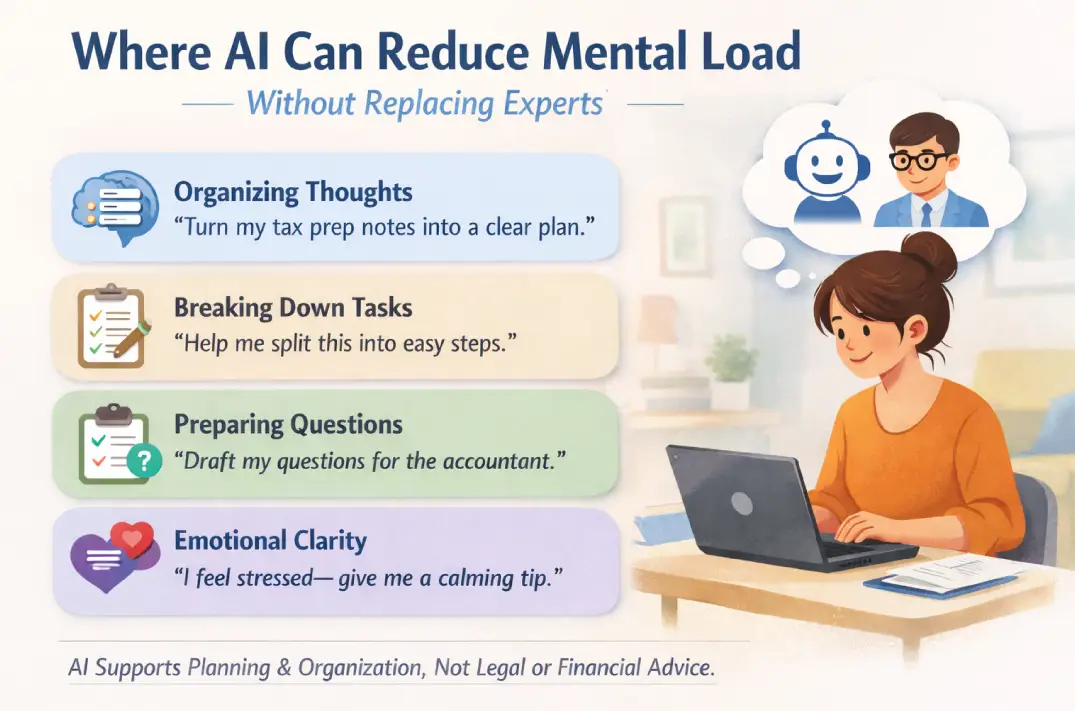
AI Prompts That Can Help During Tax Season
AI can’t replace professional tax advice, but it can make the planning, organizing, and communication around tax season feel lighter. The right prompts help you turn scattered thoughts into clear next steps, so you’re not carrying everything in your head. Here are a few practical prompts you can try:
Planning Prompts: When everything feels scattered, start by turning tax prep into a step-by-step plan.
“Create a simple 4-week tax preparation checklist for me. I feel overwhelmed and can only spend 30 minutes a day. Break tasks into small, realistic steps and include reminders for document collection and review.”
“Break down tax preparation into 15-minute tasks for someone managing household responsibilities and work. Prioritize low-effort tasks first so I can build momentum.”
Organization Prompts: Use AI to transform messy notes into clear systems.
“Help me create a document collection checklist for family tax filing. Include categories like income proof, investments, deductions, and shared household expenses. Format it as a simple table I can track weekly.”
“Turn this unorganized list of tax notes into a structured tracker with columns for task, owner, deadline, and status. Keep the format simple so I can share it with my partner.”
Communication Prompts: AI can help you frame conversations in a calm, collaborative tone.
“Help me write a supportive message to my partner about dividing tax tasks more fairly. Keep the tone respectful, clear, and focused on teamwork instead of blame.”
“Draft a concise and calm email to my accountant summarizing my questions about deductions and timelines. Organize the questions in bullet points so nothing gets missed.”
Stress-Reduction Prompts: When time is tight, focus on realistic progress instead of perfection.
“Create a low-stress tax prep plan for someone who only has 20 minutes a day. Include small wins, gentle reminders, and ways to avoid last-minute pressure.”
“Give me a simple weekly routine that reduces decision fatigue during tax season, including planning time, document review, and quick check-ins with my partner.”
These prompts don’t just help you get things done; they help shift tax prep from a mental burden into a shared, structured process that feels more manageable day by day.
Common Mistakes People Make When Using AI for Taxes
AI can make tax season feel more manageable, but only when it’s used thoughtfully. Many people end up more confused or stressed simply because of how they use it. Here are a few common mistakes to watch out for:
- Asking vague prompts: Generic questions often lead to generic answers. When prompts lack context, like your timeline, household setup, or specific concern, the guidance may feel too broad to be useful. Clear, detailed prompts usually create more practical results.
- Expecting legal or professional advice: AI can help you organize thoughts, create checklists, or draft questions, but it shouldn’t replace a qualified tax professional. Treat it as a planning assistant, not a decision-maker for financial or legal matters.
- Not verifying outputs: It’s easy to copy suggestions without double-checking them. Tax rules change often, and every situation is different, so use AI as a starting point, then review details with reliable sources or your accountant.
- Using AI only during panic mode: Many people turn to AI when deadlines are close and stress is high. But AI works best as an ongoing support tool, helping you plan early, stay organized, and reduce last-minute pressure instead of reacting to it.
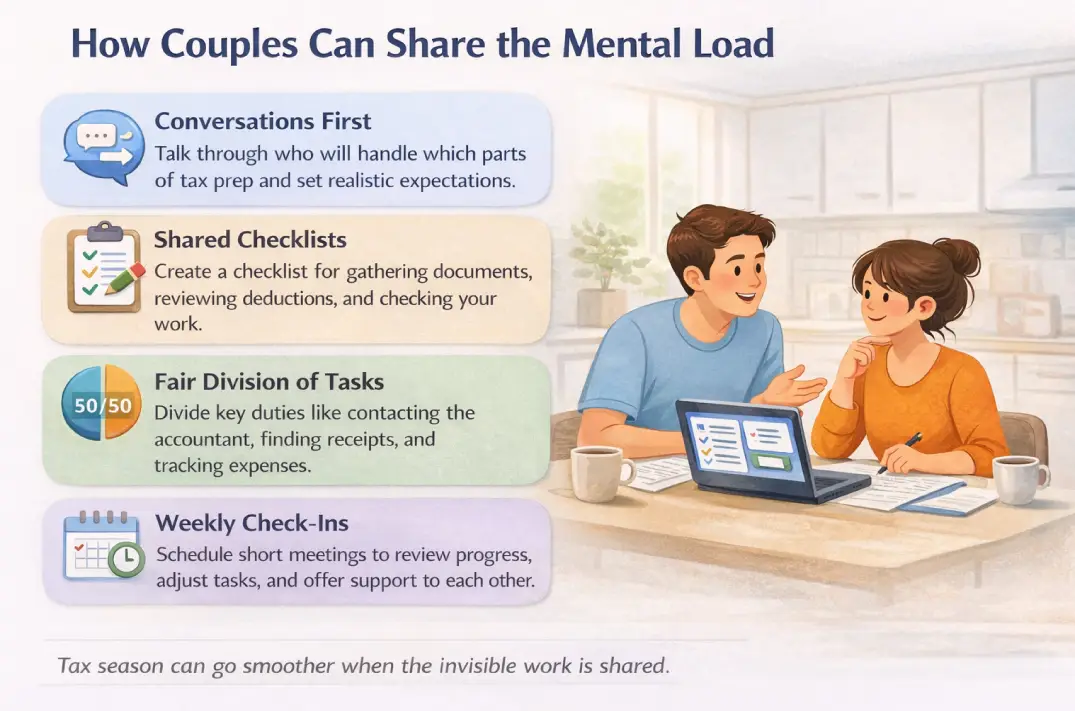
Tax season doesn’t have to feel like a silent, exhausting responsibility that one person carries alone. Often, the real challenge isn’t the filing itself, it’s the constant thinking, remembering, and coordinating that happens behind the scenes. Recognizing this mental load is the first step toward changing how tax preparation feels.
When tasks are broken into smaller steps and responsibilities become more visible, the pressure naturally starts to ease. AI can play a supportive role here, helping you organize thoughts, plan, and communicate more clearly, but it works best alongside human decisions, shared conversations, and trusted professional advice.
The goal isn’t to do more; it’s to create clarity. Because when the mental load becomes shared and structured, tax season shifts from overwhelming to something far more manageable.
If tax preparation has ever felt heavier than it should, you’re not alone, and you don’t have to manage it silently. Tools that bring visibility to invisible tasks can help families plan together, communicate better, and reduce the pressure that builds behind the scenes.
Explore ways to make everyday coordination feel lighter, because managing a home, finances, and life shouldn’t feel like a one-person project.