

School holidays aren’t a break. They’re a mental marathon.
Not because of the kids, but because of the invisible planning that keeps everything running when routines disappear.
And most of that work? It’s happening silently, inside one parent’s head.
What Is “Mental Load”?
Mental load isn’t about doing more. It’s about thinking more.
It’s the invisible work of remembering, tracking, anticipating, and planning, running quietly in the background all day. And during school holidays, that background noise gets louder. Here’s why:
No Fixed Schedules: School routines disappear. So every day has to be mentally built from scratch, meals, activities, work calls, pickups, and backups.
More Decisions, Fewer Routines: Without routines to fall back on, small decisions pile up. What to eat. When to play. How much screen time. What’s next. Individually minor. Collectively exhausting.
Constant Role Switching: Work mode. Parent mode. Planner mode. Emotional support mode. Switching between them all day drains focus, even on “easy” days.
This is why holidays can feel heavier, not lighter. The load isn’t visible, but it’s there.
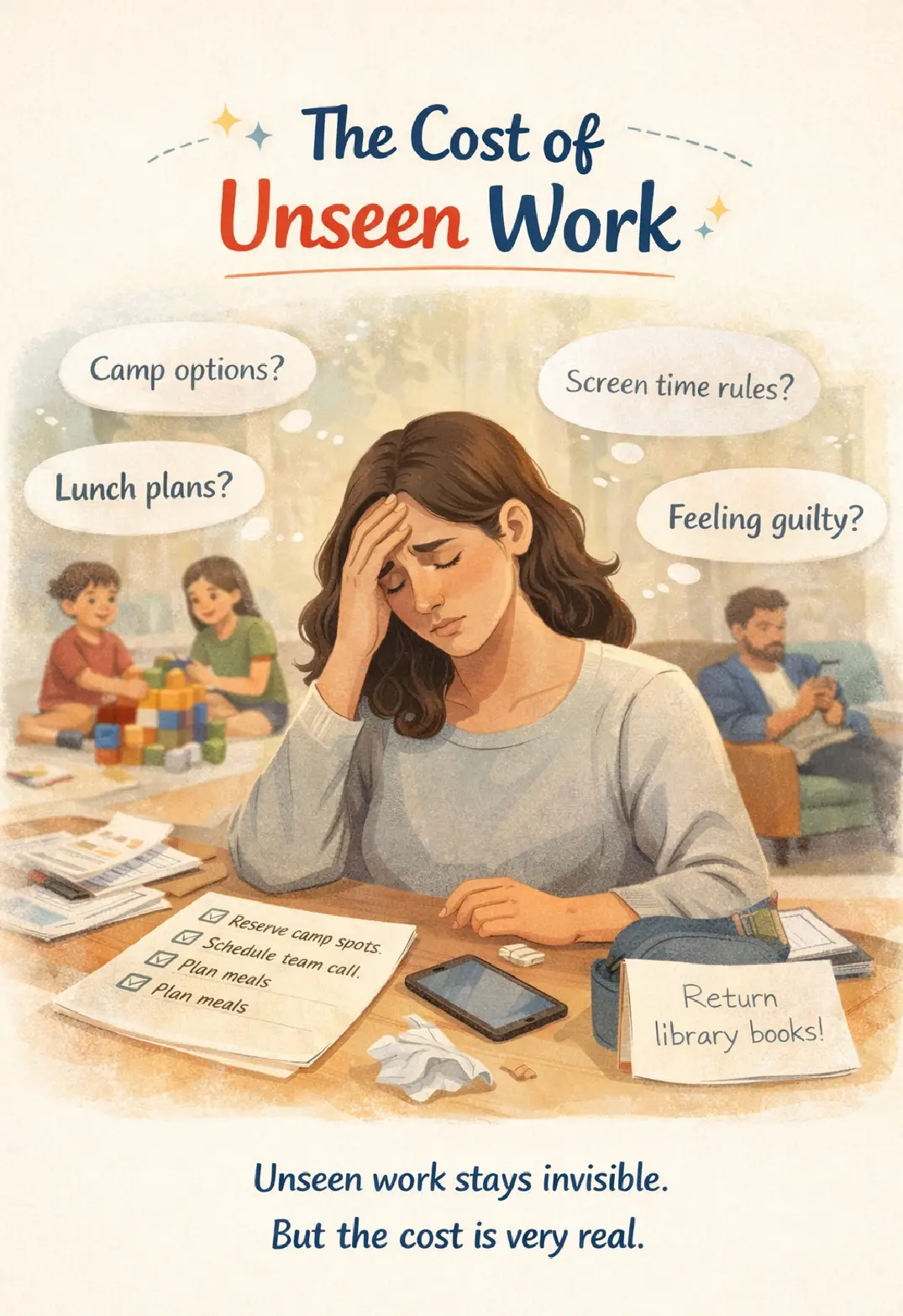
The Invisible To-Do List Behind School Holidays
School holidays don’t come with a schedule. They come with an invisible to-do list, one that lives entirely in someone’s head.
It’s not written down.
It’s not evenly shared.
But it’s always running.
Planning & Coordination: Before the holidays even begin, the planning starts.
Researching local activities.
Negotiate which parent will take time off from work to be with kids?
Discuss, Should we take a trip? If yes,
Where should we go?
Compare locations, flights, hotels
Make travel arrangements
Lining up backups in case plans fall through.
All while mentally aligning holiday dates with work meetings, deadlines, and leave calendars—often weeks or months in advance.
Logistics & Daily Execution: Once holidays start, execution takes over.
What’s for lunch today?
Who’s handling drop-off?
What time is pickup?
How do we get there between meetings?
Add to that the daily balancing act- screen time vs activities, structure vs rest, productivity vs peace.
It looks simple from the outside. It isn’t.
Emotional Labor: Then there’s the emotional side, quiet, constant, and draining.
Making sure kids aren’t bored.
Noticing when they’re overstimulated or restless.
Creating “fun” while managing moods, meltdowns, and energy levels.
And underneath it all, the lingering question: Am I doing enough?
This is the part no one sees. But it’s often the heaviest.
Why More Effort Isn’t the Solution?
When holidays feel chaotic, the instinct is simple: try harder.
Plan more.
Stay more organized.
Hold everything together better.
But effort isn’t what’s missing.
Most parents aren’t overwhelmed because they’re doing too little; they’re overwhelmed because they aren’t operating as a team.. More lists, reminders, and “better systems” just stack extra responsibility onto the primary caregiver.
This isn’t a productivity problem. It’s a visibility problem.
What Families Actually Need During School Holidays?
Families don’t need more effort, stricter routines, or better discipline during school holidays.
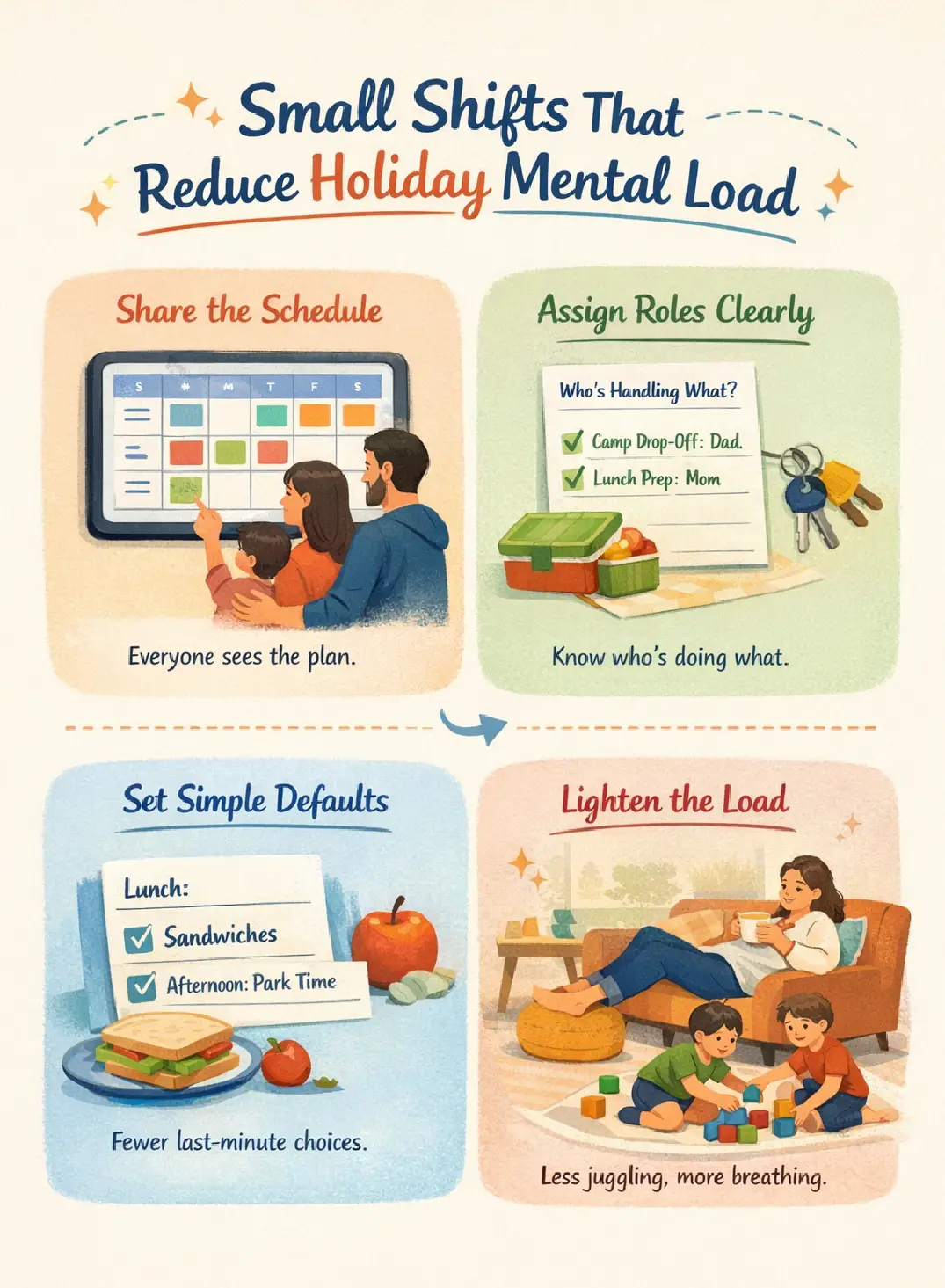
They need clarity. Shared Visibility of Plans
When everyone can see what are we doing? what’s happening, camp days, outings, quiet days, work overlaps, planning stops living in one person’s head. Shared visibility turns assumptions into alignment.
Clear Ownership: Not “I’ll help, just tell me what to do,” but clear answers to who’s handling what. When responsibility is explicit, follow-ups disappear, and so does the mental load of remembering to remind.
Fewer Last-Minute Decisions: Constant reacting is exhausting. Simple defaults; planned meals, known activities, flexible backup options, remove dozens of daily decisions that quietly drain energy.
Systems That Reduce Thinking: The goal isn’t another app or checklist. It’s fewer things to remember, fewer questions to answer, and less mental juggling.
Because the best systems don’t add work. They take thinking off your plate.
How Aligna Fits In?
Aligna isn’t another task app telling families what to do.
It’s a coordination layer; a shared space where plans, responsibilities, and everyday logistics are visible to everyone, not just carried by one person.
By making plans visible, Aligna turns invisible work into shared clarity. What’s happening? Who’s handling it? What’s already been thought through? No guessing. No constant explaining.
Because clarity is shared, partners can participate meaningfully, without needing reminders, nudges, or instructions. Not helping. Just owning.
Aligna doesn’t try to optimize families. It helps them feel calmer, especially during the seasons that usually feel the heaviest.
School holidays aren’t the problem. The exhaustion comes from one person quietly carrying the planning, the decisions, and the emotional weight; day after day, without shared systems or visibility.
When planning is shared, holidays feel different. Lighter. Calmer. Less reactive.
Aligna is being built to help families share that load through clarity, coordination, and calmer days.
If you’d like to be part of our beta and help shape a more thoughtful way to manage family life, we’d love to have you. Join the Aligna beta and explore what shared clarity can feel like.