

January is supposed to be about fresh starts, goal setting, revenue projections, and so on…
But the primary caregivers are already fighting the summer camp chaos
“What dates do we need child care coverage in the Summer?”
“Will this camp clash with work hours?”
“Who’s handling drop-off on Tuesdays?”
“Why do all the good camps fill up faster than concert tickets?”
Because summer planning isn’t one task.
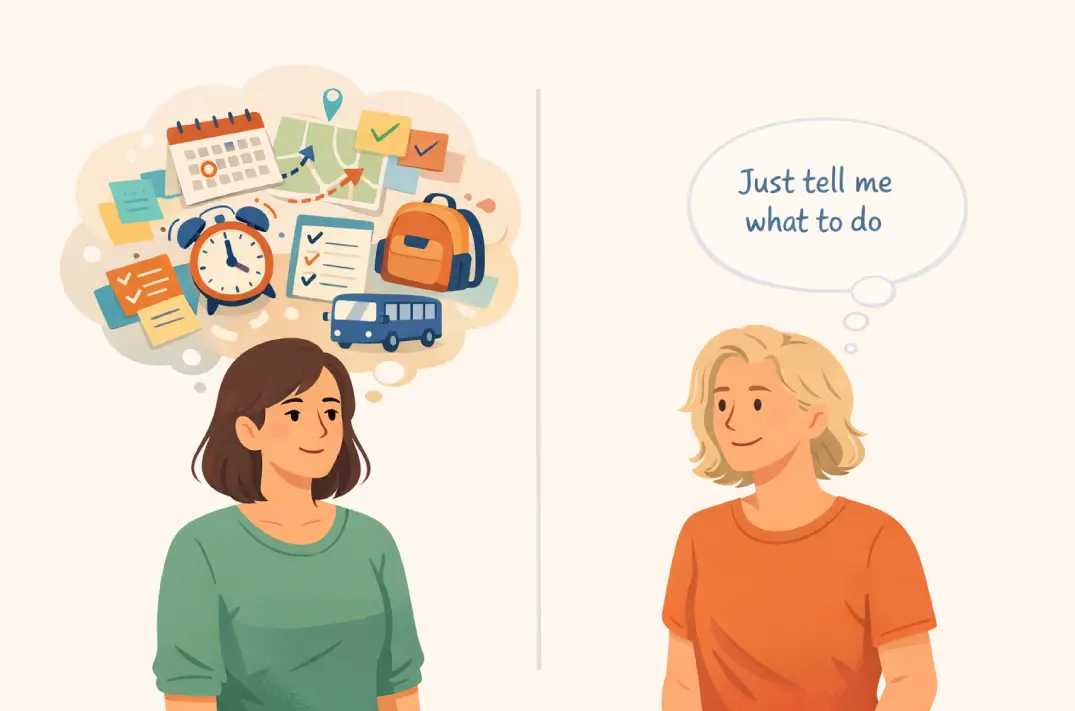
It’s dozens of invisible decisions, reminders, and contingency plans; usually carried by one partner while the other asks, “Just tell me what you need.”
That’s not teamwork. That’s a mental load in disguise.
Why does something so normal feel so overwhelming?
What “Camp Enrollment” Really Means (Beyond the Form)
On the surface, camp enrollment sounds simple.
Fill a form. Pay a fee. Done.
Right?
Let’s do a quick reality check!
As you read this, mentally tick off how many of these you’re actually handling.
The Invisible Checklist You’re Carrying
Step 1: Camp Research (a.k.a. Decision Olympics)
You’re not just picking a camp. You’re balancing:
- Will my child actually enjoy this?
- Does it align with work hours?
- What about that family vacation?
- Or the wedding in July that cannot be moved?
That’s not research. That’s future forecasting.
Step 2: Deadline Math & Waitlist Anxiety
- Which camps fill up first?
- Which ones have waitlists?
- Which deadline did I already miss?
- Which one requires a reminder right now?
- Which camp requires me to send a physical check payment VS cash drop off? Yes, folks, that’s a reality.
Your brain becomes a living calendar, with anxiety notifications enabled.
Step 3: Transportation Logic (because Ninjas can’t be everywhere)
- Who’s doing drop-off?
- Who’s handling pickup?
- What happens on meeting-heavy days?
- What’s the backup plan if one person can’t make it?
Spoiler: Uber is not a strategy.
Step 4: Conflict Prediction (Months in Advance)
You’re quietly scanning the future:
- “This overlaps with our trip.”
- “That week will be chaos at work.”
- “This camp works… unless something changes.”
And something always changes.
Now Pause for a Second.
Notice something?
None of this shows up on the enrollment form.
There’s no checkbox for “held 47 moving pieces in my head.”
No field for “mentally simulated three versions of summer.”
Yet one parent is usually carrying all of it.
This is MENTAL LOAD.
Invisible. Uncredited. Constant.
And it’s why “just signing up for camp” feels exhausting, long before summer even begins.
The January Planning Sprint: Why This Stress Hits So Early
January isn’t supposed to be stressful.
And yet, for many families, it’s the month where things quietly start breathing down your neck.
Not because you love planning, but because summer childcare has become a game of musical chairs. And if you don’t grab a seat early, you’re left scrambling later.
Why the Rush Feels So Intense?
High Demand, Limited Options: Summer camps and childcare programs fill up fast. There are more families than spots, and everyone knows it. So January turns into a silent race; whoever moves first wins a sense of relief.
Fear-Based Timelines: The unspoken rule- “If you don’t sign up now, you’ll regret it.” No one says it outright, but the urgency is baked into every email, deadline, and “only a few spots left” reminder.
Stress Gets Rescheduled, Not Reduced: Early planning doesn’t eliminate stress; it just relocates it. Instead of worrying in June, families carry the mental load in January, February, and March… while juggling work, school, and everything else.
Planning Before You’re Ready: You’re making decisions months in advance:
Before work schedules are clear
Before vacations are finalized
Before life inevitably changes
And yet, waiting isn’t really an option.
The Result?
Families aren’t planning because they feel prepared. They’re planning because the system doesn’t allow hesitation.
And that constant urgency?
It’s a major reason summer planning feels exhausting long before summer even arrives.
What Families Actually Need?
When planning feels overwhelming, the default advice is usually the same:
Add a reminder. Download an app. Try harder to stay organized.
But most families aren’t struggling because they lack effort or tools.
They’re struggling because the system is fragmented, and one person is forced to hold it all together.
What Families Don’t Need?
- More reminders: Reminders assume you forgot. Most parents didn’t forget; they’re already remembering too much.
- More apps: Another app often means another place to check, update, and mentally track.
- More personal discipline: Burnout isn’t a motivation problem. It’s a coordination problem.
What Families Actually Need?
- Shared visibility: Everyone should be able to see what’s coming, without asking or guessing.
- Clear ownership: Not “helping,” but knowing who owns what and when.
- A single source of truth: One place where plans live, evolve, and stay updated.
- Less thinking, more alignment: Fewer mental loops. Fewer check-ins. More trust that nothing is slipping through the cracks.
Families don’t need to do more.
They need systems that carry the load with them, not on top of them.
Where Aligna Fits In?
Aligna isn’t a productivity app.
Nor is it to help families “do more.”
It exists for a simpler reason: to reduce the invisible coordination work families are already doing, ALONE.
Think of Aligna as a shared coordination layer, the place where plans live outside one person’s head.
What Aligna Helps With?
- It makes invisible work visible: The thinking, planning, tracking, and anticipating that usually goes unnoticed finally has a place to live, clearly and openly.
- It turns mental load into shared action: Instead of one person carrying the full picture and delegating tasks, everyone can see what needs to happen and step in naturally.
- It helps partners participate meaningfully: No more “just tell me what to do.” Participation comes from clarity, not instructions.
- It focuses on clarity, not control: Aligna isn’t about micromanaging. It’s about alignment; so families can plan together, adjust together, and breathe a little easier together.
Aligna doesn’t replace communication. It supports this by removing mental clutter from the conversation.

The real question isn’t whether you planned early enough.
It’s whether you had to plan it alone.
Early camp sign-ups, color-coded calendars, detailed camp spread sheetand January checklists aren’t signs of exceptional organization. They’re coping mechanisms in a system that quietly pushes coordination work onto one person and calls it “being on top of things.”
Families aren’t failing at planning.
They’re carrying too much of it in their heads.
What looks like organization from the outside is often invisible labor on the inside: anticipating conflicts, remembering deadlines, juggling logistics, and holding contingency plans no one else sees.
When planning becomes shared, visible, and supported, something shifts.
Not just in calendars, but in relief, trust, and how families show up for each other.
And that’s the future families deserve:
less coordination chaos, and a lot more calm.
If this story feels familiar, you’re not alone, and you’re not doing anything wrong.
Aligna is being built for families who are tired of carrying coordination work in their heads and are ready for calmer, shared systems that actually support modern life.
If you’d like to be part of our journey, sign up for our early beta access to help shape the future of family technology.
Less mental load. More alignment.