


Many couples believe they divide household tasks fairly.
One cooks. The other does the dishes.
One drops the kids off at school. The other picks them up.
On the surface, it looks balanced but it often lands unevenly in most households.
That invisible responsibility is called mental load, and it plays a bigger role in relationships than most people realize.
What Is Mental Load?
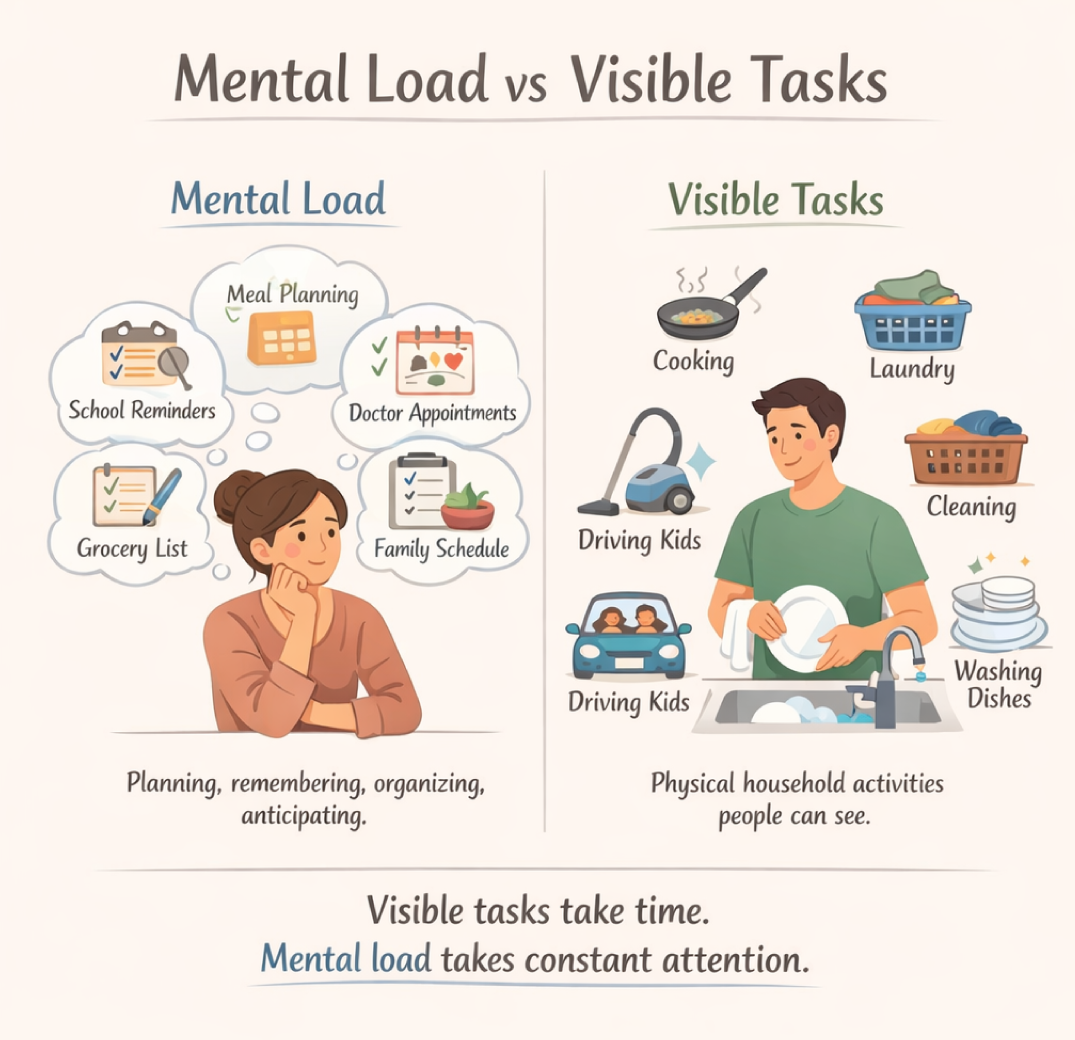
Mental load refers to the invisible work of planning, organizing, and remembering the many responsibilities that keep a household running smoothly. Unlike physical tasks that one can see, like cooking dinner or cleaning, the mental load happens behind the scenes.
When one partner carries most of this responsibility, it can lead to stress, exhaustion, and feelings of imbalance in the relationship, making mental load an important topic for couples to understand and address.
What Are Visible Tasks?
Visible tasks are the physical actions in a household that one can clearly see being done. These include activities like cooking meals, washing dishes, doing laundry, cleaning the house, or driving kids to school.
Because these tasks are observable, they are often easier to recognize and divide between partners. However, visible tasks usually represent only the execution of work, while the planning, organizing, and remembering behind the scenes often remain unseen. Understanding the difference between visible tasks and mental load helps couples better recognize how responsibilities are truly shared at home.
How Invisible Mental Load Affects Relationships?
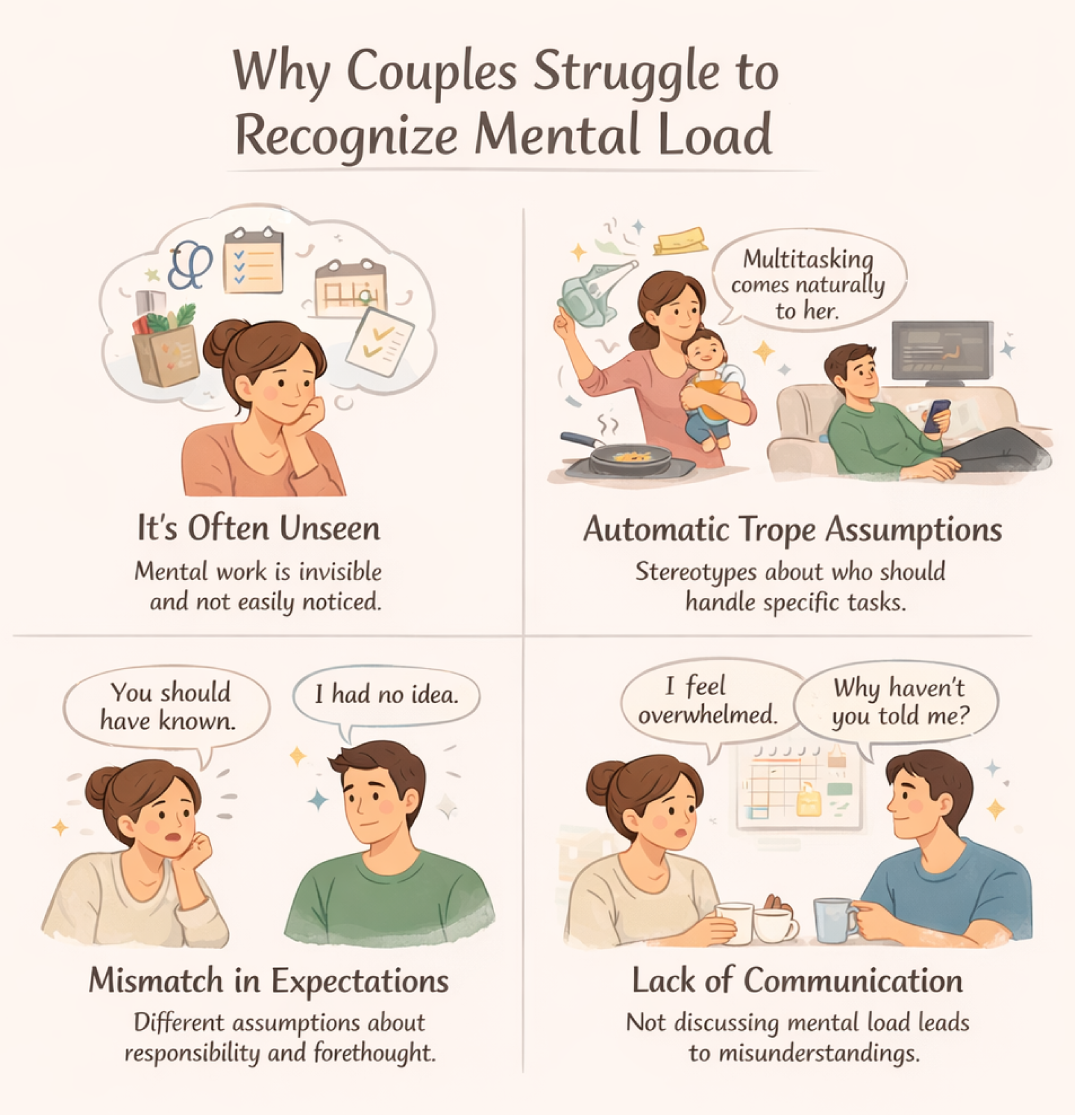
When the mental load in a household is unevenly distributed, it can quietly impact the emotional balance of a relationship. Because this work happens behind the scenes, it often goes unnoticed, making it difficult for others to understand the weight of carrying it every day.
Emotional Exhaustion and Burnout: Managing the mental load means constantly thinking ahead, remembering schedules, planning tasks, anticipating needs, and keeping track of responsibilities. Over time, this continuous mental processing can lead to mental fatigue and emotional exhaustion. When one partner is always in “planning mode,” they may feel overwhelmed and drained, even if visible tasks appear to be shared. This can gradually lead to frustration and stress in a relationship.
Feelings of Imbalance and Resentment: If one partner consistently carries the responsibility of organizing family life, it may create a sense of unequal partnership. Even when the other partner helps with execution, the burden of remembering and managing everything can still fall unevenly. This imbalance can lead to feelings such as:
- “I have to think about everything.”
- “Why am I the one responsible for managing the household?”
- “I wish someone would notice how much I’m handling.”
Over time, these feelings can develop into resentment if the mental load remains unrecognized.
Communication Breakdowns: Mental load often shows up in everyday arguments that seem to be about small things but are actually about invisible responsibility. Conversations like:
- “You should have told me earlier.”
- “Why do I always have to remind you?”
- “I feel like I’m doing this alone.”
These disagreements are rarely about the specific task itself. Instead, they reflect deeper frustration about who is responsible for managing and remembering everything.
Reduced Relationship Satisfaction: When one partner feels overwhelmed, and the other feels constantly reminded or corrected, it can create tension in the relationship. Instead of feeling like a team, couples may begin to feel like one partner is managing while the other is assisting.
Over time, this dynamic can affect emotional closeness, appreciation, and overall relationship satisfaction. Recognizing and addressing mental load helps couples move toward a more balanced, supportive partnership where responsibilities, both visible and invisible, are shared more fairly.
How Mental Load Impacts Family Well-Being
Mental load doesn’t just affect one partner; it shapes the overall well-being of the entire family. When one partner constantly carries the responsibility of planning, remembering, and organizing everyday life, the pressure can gradually affect health, parenting, work, and relationships.
- Impact on Health: Constant mental tracking can lead to stress, fatigue, and emotional burnout. When someone is always thinking about what needs to be done next, it becomes difficult to truly rest or recharge.
- Impact on Parenting: Managing school updates, activities, appointments, and routines alone can make parenting feel overwhelming. Sharing this responsibility helps create a more balanced and supportive parenting dynamic.
- Impact on Work-Life Balance: Mental load often follows people into their workday. Constant reminders and planning in the background can make it harder to focus, increasing daily stress.
- Impact on Family Harmony: When the invisible work goes unnoticed, it can create frustration and imbalance in relationships. But when responsibilities are shared more fairly, families experience less stress, better communication, and stronger partnerships.
How Couples Can Distribute Mental Load More Fairly?
Sharing mental load isn’t about splitting every chore equally; it’s about sharing the responsibility of planning, remembering, and managing daily life so that one partner doesn’t feel they are carrying everything alone.
- Make Invisible Work Visible: Start by listing all responsibilities in the household; not just tasks, but also the planning behind them. When both partners see the full picture, it becomes easier to distribute responsibilities fairly.
- Own Responsibilities End-to-End: Instead of helping occasionally, each partner should fully claim certain areas. For example, one partner handles groceries and meal planning while the other manages school schedules and family appointments. Check out our Chore Tracker freebie on Chore Tracker
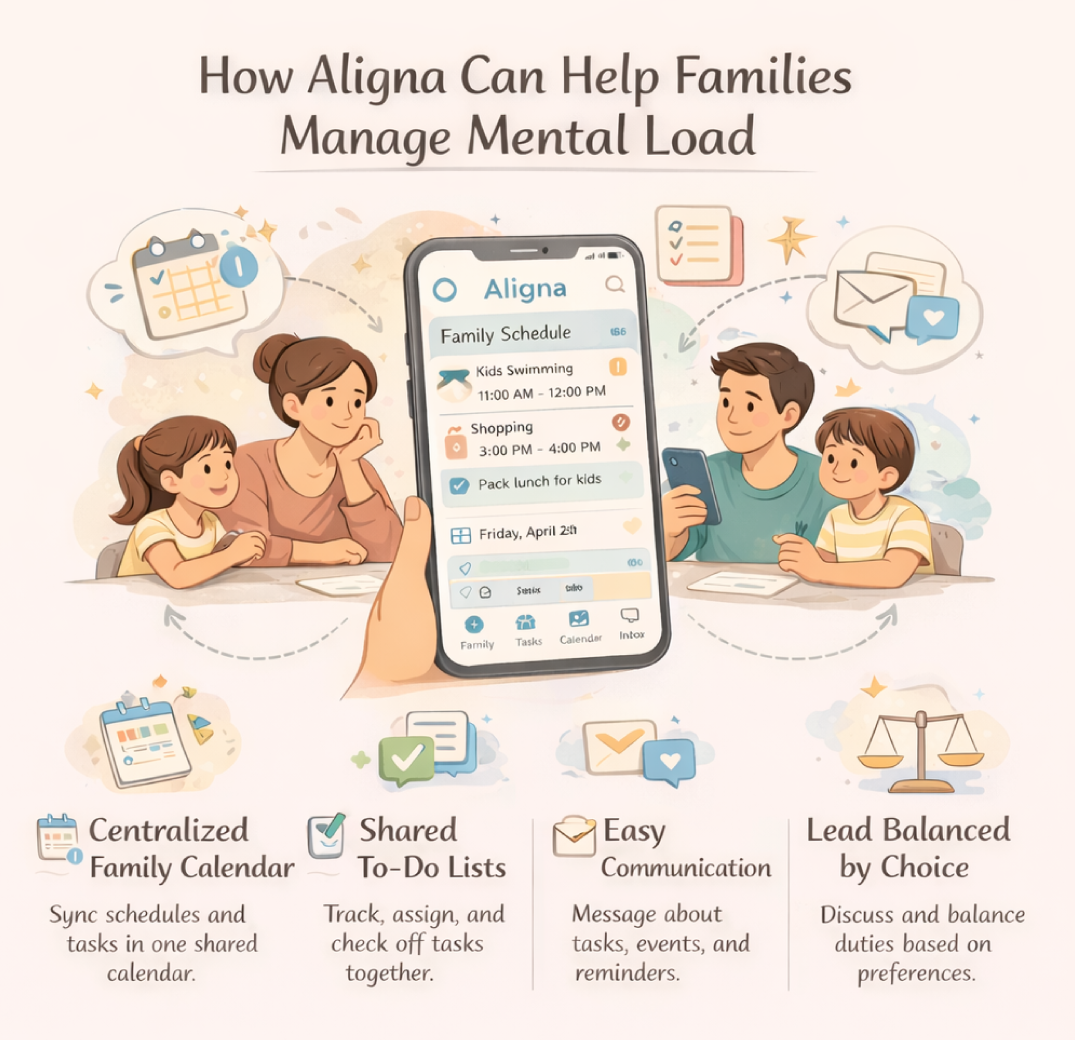
- Use Shared Systems: Shared calendars, task lists, or planning tools help both partners stay informed. This reduces constant reminders and ensures responsibilities don’t fall on one partner.
- Communicate Regularly: Schedule Weekly Check-In. Simple weekly check-ins help couples stay aligned, adjust responsibilities, and support each other during busy periods.
When couples share both the tasks and the thinking behind them, family life becomes more balanced and harmonious.
Mental load is often invisible, but its impact on relationships and family life is very real. When one partner carries the responsibility of planning, remembering, and managing everyday life, it can rob families of everyday joy and peace. Recognizing this invisible work is the first step toward building a healthier partnership. When couples openly acknowledge mental load and intentionally share responsibilities, both the tasks and the planning behind them, it can create a more balanced and joyful household.
Tools and systems that bring clarity to household responsibilities can make this process easier. Platforms like Aligna are designed to help couples organize family life, make invisible responsibilities visible, and distribute them more fairly, so families can focus less on managing tasks and more on enjoying time together and connect meaningfully.