


You may not always see it, but mental invisible load slowly builds pressure in everyday life. The constant need to remember, plan, anticipate problems, and keep everything running smoothly can quietly turn into stress and anxiety over time. When this pressure stays unspoken or unshared, it often begins to show up in other ways.
For many women, the mental strain can lead to emotional exhaustion, stress eating, sleep issues, or weight fluctuations.
For many men, the pressure of responsibilities and expectations may manifest differently sometimes through increased irritability, withdrawal, or coping habits like excessive drinking or overworking.
These reactions are not simply about personal habits; they are often symptoms of an invisible mental burden that people carry every day. And because this load is rarely discussed openly, many couples fail to recognize how deeply it can affect both partners and the health of their relationship. Understanding how mental invisible load affects men and women differently is the first step toward creating more balanced, supportive partnerships.
Why Mental Load Is Often Invisible?
Mental load is often invisible because it happens mostly inside a person’s mind rather than through visible actions. While physical tasks like cooking, cleaning, or running errands are easy to notice, the thinking, planning, and remembering behind those tasks usually go unnoticed.
For example, someone may be the one remembering birthdays, planning meals, tracking appointments, or anticipating family needs long before any action takes place. Since this work doesn’t always look like “doing something,” it is rarely acknowledged.
Over time, this hidden responsibility becomes a routine part of daily life, making it easy for others to overlook the mental effort required to keep everything organized and running smoothly.
How Mental Invisible Load Affects Women?
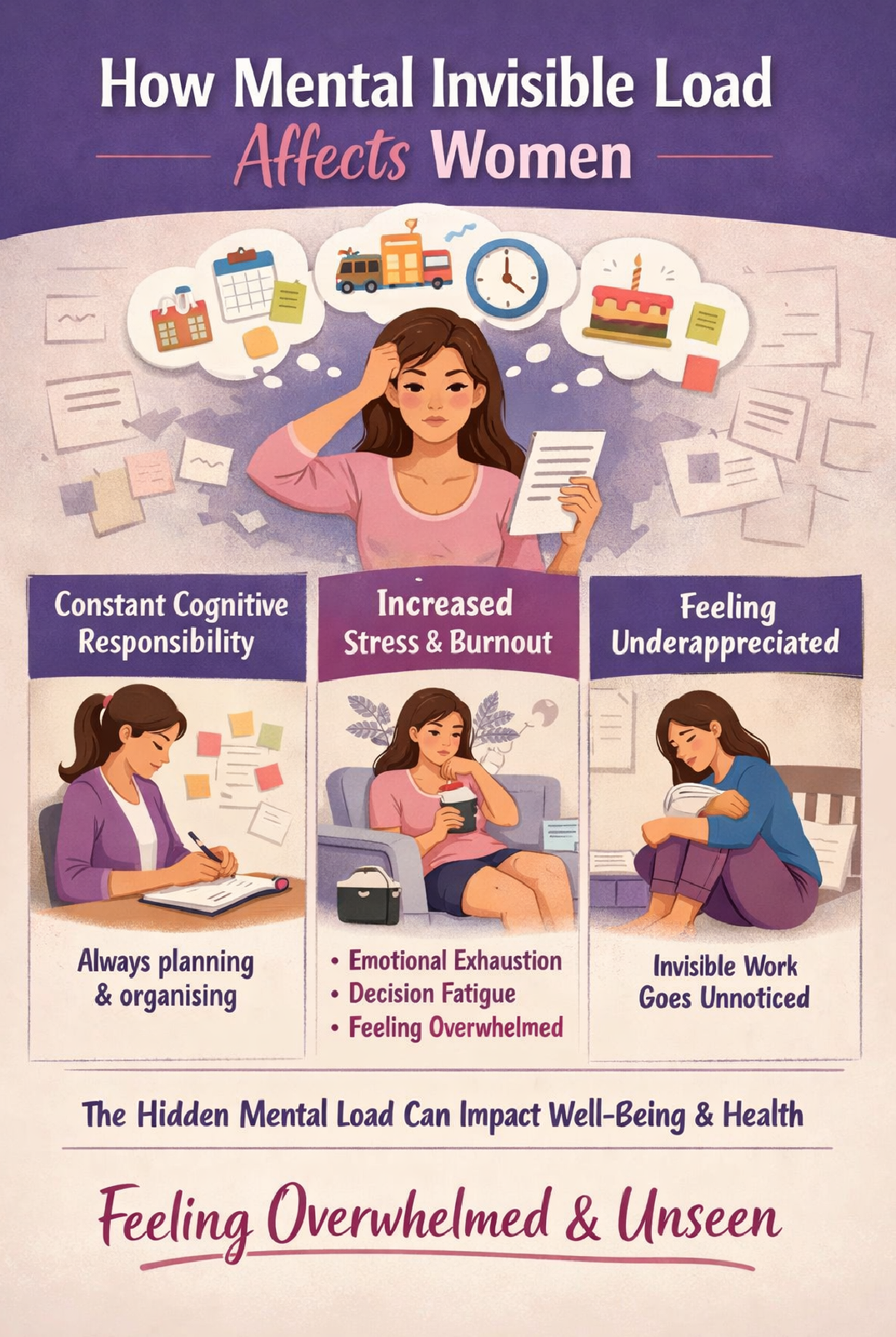
The mental invisible load often affects women more intensely because they frequently become the default planners and coordinators in households. Beyond completing tasks, they are often responsible for remembering, organizing, and anticipating what needs to be done. Over time, this constant mental responsibility can impact emotional well-being, energy levels, and overall stress.
Constant Cognitive Responsibility: In many households, women naturally take on the role of the primary organizer of daily life. This means they are not only handling tasks but also managing the thinking behind them. Examples include:
- Planning meals for the week
- Remembering family appointments
- Managing school schedules or events
- Tracking household supplies
- Coordinating social or family activities
Because these responsibilities require continuous thinking and planning, the mental workload rarely stops, even during rest time.
Increased Stress and Burnout: Managing multiple responsibilities at once can gradually lead to mental and emotional exhaustion. The pressure of keeping everything organized can create a constant sense of urgency. Common effects include:
- Emotional exhaustion from continuously managing tasks and expectations
- Decision fatigue from making dozens of small decisions every day
- Feeling overwhelmed by the need to balance work, home, and personal responsibilities
Over time, this constant mental pressure may contribute to anxiety, stress, and difficulty switching off from responsibilities.
Feeling Underappreciated: One of the most challenging aspects of mental load is that it is rarely visible to others. Since much of the effort happens mentally, partners or family members may not recognize the amount of work involved. This lack of recognition can lead to:
- Feeling unsupported or unnoticed
- Emotional frustration or resentment
- A sense that responsibilities are unfairly distributed
When the invisible effort behind daily life goes unacknowledged, it can slowly affect both personal well-being and relationship satisfaction.
How Mental Invisible Load Affects Men?
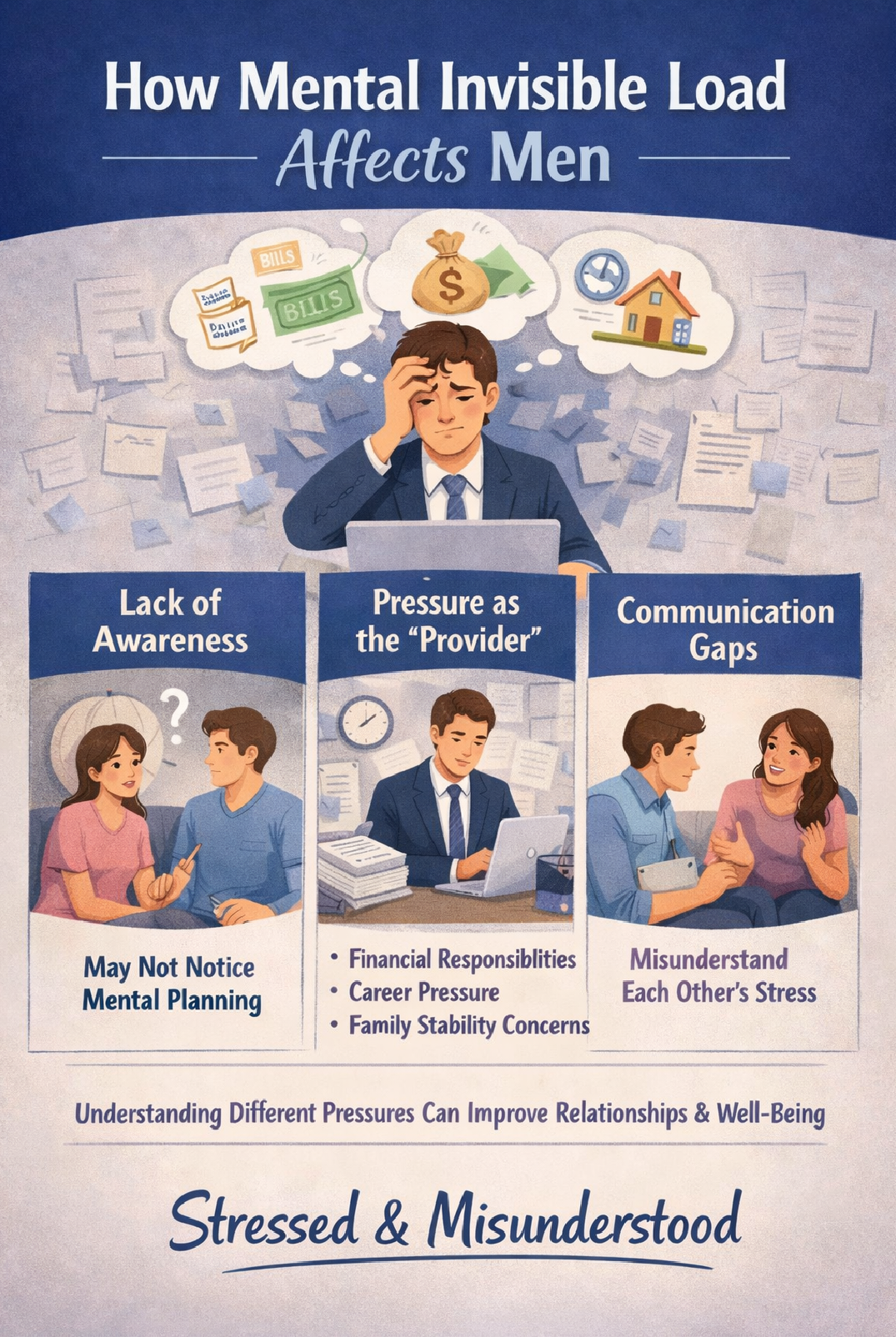
While mental invisible load is often discussed in relation to women, men also experience it, though it may appear in different forms and pressures. In many cases, men may carry stress related to financial responsibility, long-term stability, and expectations placed on them by society. When these pressures remain unspoken, they can affect emotional well-being and communication within relationships.
Lack of Awareness: Many men may not always recognize the full extent of the invisible planning and coordination happening in the household. Since mental tasks like remembering schedules, planning meals, or managing family details happen quietly in the background, they can be easy to overlook. This lack of awareness does not necessarily come from indifference but often from different social conditioning and role expectations. As a result, men may not immediately realize how much mental effort their partner is carrying.
Pressure as the “Provider”: Men often experience mental load through financial and long-term responsibilities. In many cultures, there is still an expectation that men should ensure stability and security for the family. This pressure can include:
- Managing financial responsibilities and household expenses
- Career pressure and the need to maintain a steady income
- Concerns about long-term family security and future planning
Carrying these expectations can create its own form of mental stress and internal pressure, even if it is not always openly discussed.
Communication Gaps: When partners do not openly talk about their mental pressures, it can create misunderstandings within relationships. One partner may feel overwhelmed by daily planning, while the other may feel burdened by financial or career expectations. Without open communication, both individuals may struggle to understand the different kinds of mental load each person is carrying. Recognizing and discussing these pressures is an important step toward building more balanced and supportive partnerships.
Why Addressing Mental Load Is Important for Healthy Relationships?
Addressing mental load is essential for maintaining balance, understanding, and emotional well-being in a relationship. When one partner consistently carries most of the planning, organizing, and remembering, it can gradually lead to stress, frustration, and feelings of unfairness. Recognizing and discussing mental load helps couples become more aware of each other’s responsibilities and pressures. It encourages open communication, better teamwork, and a more balanced distribution of responsibilities. When both partners actively share not just tasks but also the planning behind them, it creates a stronger sense of partnership and mutual support in everyday life.
How Couples Can Share the Mental Load Better?
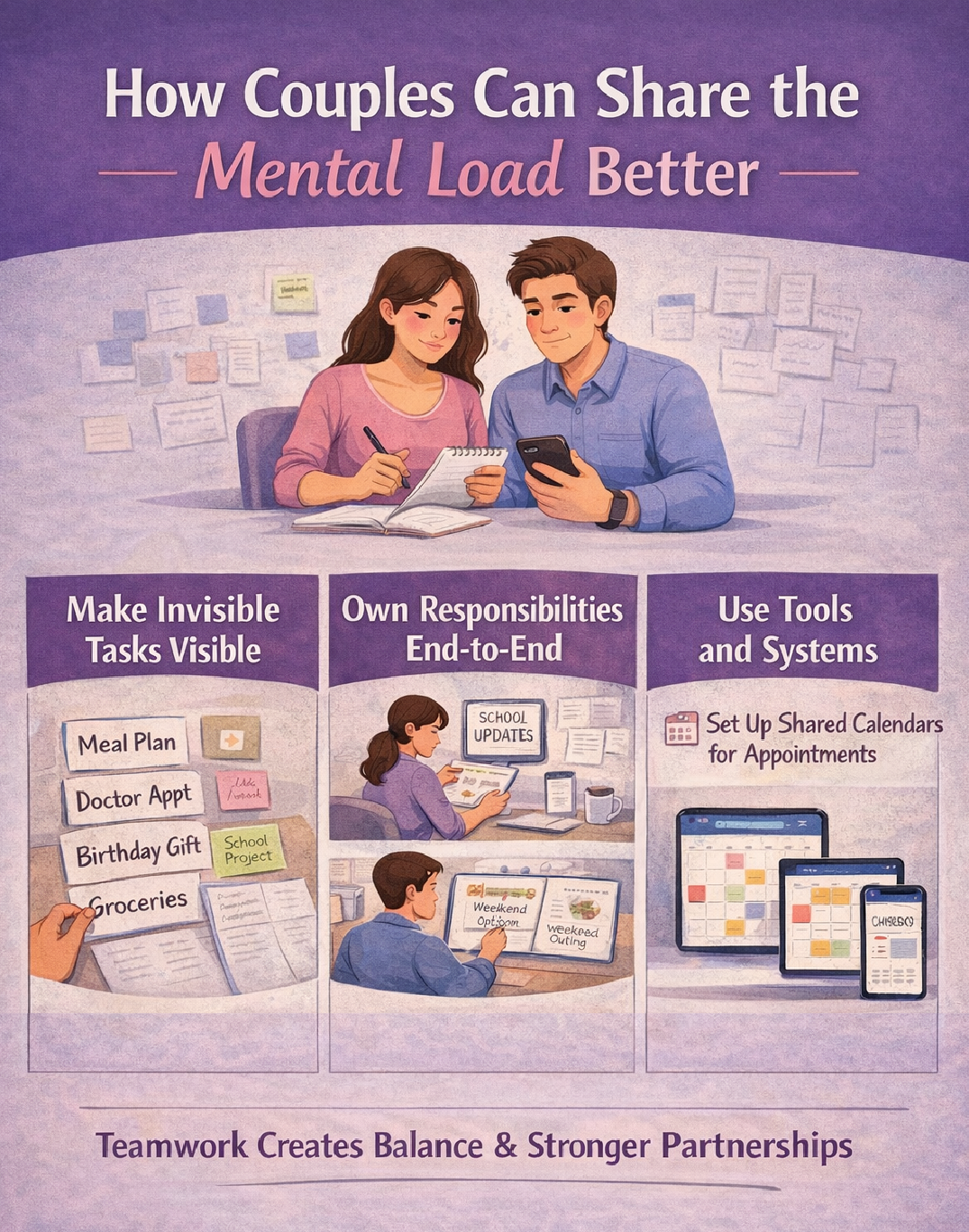
Sharing the mental load begins with awareness and intentional teamwork. It’s not just about dividing chores but also sharing the thinking, planning, and responsibility behind them. When couples consciously work together to balance these responsibilities, daily life becomes more manageable, and the relationship feels more supportive and equal.
Make Invisible Tasks Visible: The first step is recognizing that many responsibilities exist behind the scenes. Couples can sit together and list out all the tasks involved in managing daily life. This may include:
- Planning meals
- Tracking family schedules
- Managing household supplies
- Remembering important dates or appointments
Seeing everything written down helps both partners understand the true scope of mental work involved in running a household.
Own Responsibilities End-to-End: Instead of one partner constantly assigning tasks, it helps when each person takes complete ownership of certain responsibilities. This means handling not just the task itself but also the planning and follow-up involved. For example:
- Managing school communication and updates
- Handling grocery planning and shopping
- Organizing weekend activities or family outings
This approach reduces the need for constant reminders and distributes the mental effort more evenly.
Use Tools and Systems: Practical tools can make it easier for couples to stay organized and share responsibilities. Helpful options include:
- Shared digital calendars for tracking appointments and events
- Task management apps to assign and monitor responsibilities
- Weekly planning conversations to discuss upcoming tasks and priorities
These small systems help ensure that both partners stay informed and involved, making everyday responsibilities less overwhelming and more collaborative.
Mental invisible load is a quiet but powerful part of everyday life. The constant planning, remembering, and organizing that keeps families and relationships running smoothly often goes unnoticed, yet it can significantly impact emotional well-being. While women may frequently carry the responsibility of managing daily details, men may experience pressure through financial responsibilities and long-term stability concerns. Both forms of mental load deserve recognition and understanding.
Creating healthier relationships starts with awareness, communication, and shared responsibility. When couples openly discuss the unseen efforts behind daily life and work together to distribute responsibilities more fairly, it builds stronger trust, support, and partnership.
At Aligna, we believe that stronger relationships begin with better understanding. By encouraging open conversations and balanced partnerships, couples can create a more supportive and emotionally connected life together. You can also join the Aligna Beta Community, a space where you can share your thoughts & help us create a balanced application through open conversations and shared understanding.
Be part of the journey as we shape tools, insights, and discussions designed to support modern partnerships.