



You look fine. Smiling. Handling the day.
But in the back of the head? There is a list.
You didn’t write this list but this list just lives there.
It’s a running to-do list of meals, bills, reminders, plans, and things no one else is tracking.
Nothing is visibly wrong. But nothing ever really stops either.
That’s the mental invisible load.
And the hardest part isn’t carrying it. It’s explaining it and constantly transferring knowledge without sounding frustrated.
What Is Mental Load (And Why It’s Hard to Explain)?
Mental load is not just about doing tasks; it’s about remembering, planning, and anticipating them. From keeping track of groceries and bills to scheduling appointments and thinking ahead for the family, it’s the constant mental checklist running in the background.
What makes it harder is that this work isn’t visible. It doesn’t show up on any to-do list. There’s no clear “start” or “end,” and often, no acknowledgment. To someone else, it may look like things are simply getting done.
That’s why explaining mental load feels so difficult.
You’re not just talking about actual tangible tasks, you’re trying to describe a mental responsibility that never really switches off.
And when something is invisible, it’s easy for it to be misunderstood.
Why Conversations About Mental Load Often Trigger Tension?
Talking about mental load isn’t just difficult; it’s often misunderstood. Not because the concern isn’t valid, but because how it’s expressed and received can quickly derail the conversation.
- It Comes Out as Frustration, Not Clarity: Mental load builds up over time. By the time it’s spoken about, it’s often layered with exhaustion and resentment. Instead of a clear explanation, it comes out as frustration, making it harder for the other Partner to fully understand what’s actually needed.
- The Other Partner Feels Blamed: When the conversation starts with “You never…” or “You don’t…”, it can feel like an accusation. This often triggers defensiveness, where the focus shifts from understanding the issue to protecting oneself.
- Timing Is Usually Off: These conversations often happen in the middle of a stressful situation or conflict—when emotions are already elevated. In those moments, neither partner is in the right space to listen, reflect, or respond calmly.
How to Talk About Mental Load Without Conflict?
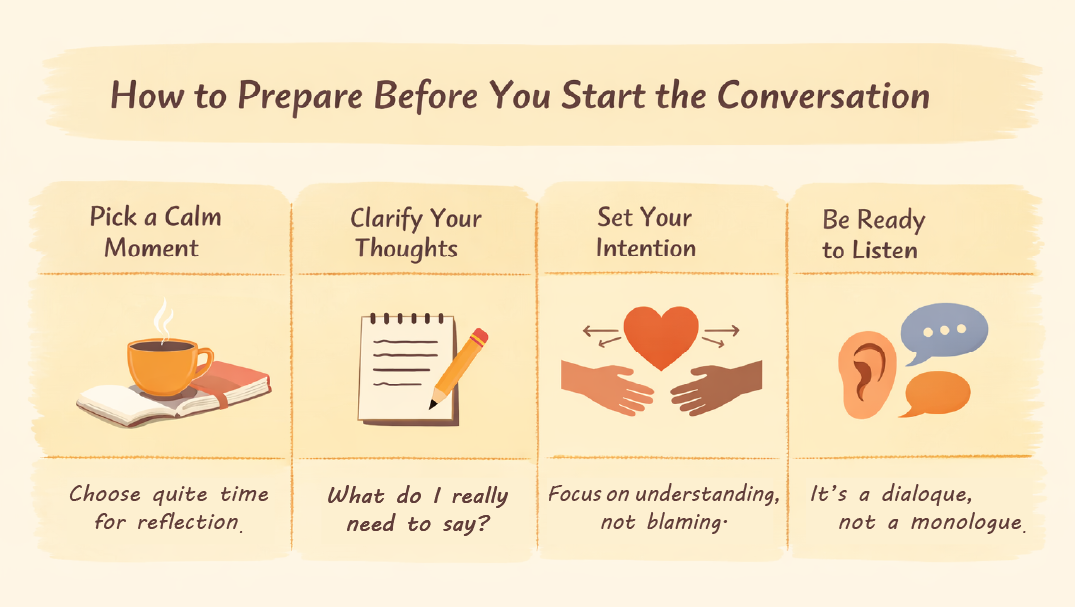
Talking about mental load isn’t just about what you say; it’s about how and when you say it.
The goal isn’t to prove a point, but to help your partner truly understand the weight of what you’re carrying and find a better way to share it. Here’s how to approach the conversation in a way that fosters harmony, not conflict:
Choose the Right Moment: Timing can shape the entire conversation. Bringing this up in the middle of an argument or when both of you are already exhausted and stressed often leads to conflict. Instead, schedule dedicated time when neither of you are rushed, distracted, or emotionally overwhelmed.
Think:
Not during the problem.
But before it becomes one.
Start With How You Feel, Not What They’re Doing Wrong: When conversations begin with blame, they often end in resistance. Instead of pointing out what your partner isn’t doing, focus on what you’re experiencing.
When you’re overwhelmed, it’s so tempting to say what’s not working:
What it often sounds like in real life:
- “Why do I have to remember everything?”
- “You never think about this stuff unless I ask.”
Totally valid feelings… but the moment it comes out this way, your partner hears criticism, not context. And that’s when they shut down, get defensive, or start keeping score.
Instead shift the direction of the statement & try:
“I’m feeling really mentally overloaded lately… like I can’t turn my brain off.”
“I’ve been carrying a lot in my head, and it’s starting to wear me down.”
This helps your partner understand your emotional state, rather than feeling attacked.
You’re not removing the truth—you’re removing the trigger.
Explain the Invisible Work: Mental load is hard to grasp because it doesn’t show up on a to-do list. To your Partner, it might seem like tasks are simply getting done without realizing the planning behind them.
Break it down by phases of anticipating needs, planning and execution:
The task of cooking requires:
Anticipate:
- What to cook for whom? Considering everyone’s food preferences
Plan:
- Weekly meal planning
- Grocery list making and shopping trip
Execute:
- Actual cooking and cleaning after
Explaining the lifecycle of a chore from anticipation to execution, makes it easier for your partner to understand the weight of the invisible load.
Be Clear About What You Need (Not Just “Help”): One of the biggest gaps in these conversations is vagueness. Saying “I need help” sounds clear but in real life, it often isn’t because it can still leave you with having to remember, plan and follow up. Instead, focus on ownership.
Shift from: “Can you help me more with the house stuff?”
To:
- “Can you fully take over bedtime this week—like planning it, doing it, and keeping track of it?”
- “I’d love for you to own groceries start to finish so it’s not something I have to think about.”
- “Can we split this so you’re handling X completely and I can let it go mentally?”
Clarity removes guesswork and reduces frustration and friction.
This isn’t about control, it’s about relief you can actually feel.
Focus on What Can Change—Not Just What’s Been Frustrating
When you’ve been carrying a lot for a while, it’s completely natural for things to spill out:
This often turns the conversation into a list of complaints. Instead, gently bring the focus back to what can change going forward.
Try:
- I know we’ve both been trying in different ways… but what we’re doing right now isn’t working for me.” “I want us to find a better way to manage this together.”
- “I don’t want to keep having the same conversation—can we figure out a better system going forward?”
- “What would this look like if it actually felt balanced for both of us?”
This keeps the conversation honest and forward-moving.
Invite Partnership, Not Perfection: This isn’t about dividing everything perfectly overnight. These conversations can quietly turn into unspoken expectations:
“I’ve explained this… so now things should change.”
But real life doesn’t work like that.
Change is usually uneven, a little clumsy, and takes a few tries.
And when it feels like you’re expecting instant perfection, your partner can either:
- shut down
- feel like they’re already failing
- or avoid trying altogether
Invite your partner into the process instead of expecting immediate change.
Try:
- “I know we’re both figuring this out… Can we take a first step on this together?”
- “I don’t need this to be perfect—I just don’t want to feel like I’m carrying it alone.”
- “Even small changes here would make a big difference for me.”
When it feels like a shared effort, it’s easier for both people to stay open and engaged.
Keep the Conversation Ongoing: Mental load isn’t a one-time conversation. It evolves with routines, responsibilities, and life changes. Make space for small, regular check-ins, so things don’t build up to the point of frustration again. Because sometimes, it’s not one big conversation that changes things, it’s the small, consistent ones that follow.
How Aligna Can Help?
Sometimes, the challenge isn’t just the mental load; it’s finding the right words to talk about it. That’s where Aligna comes in.
Aligna helps couples move from chaos to connection by creating a shared space where both partners feel seen, without blame or defensiveness. Instead of conversations turning into arguments, they become clearer, calmer, and more constructive. Through guided support and centralized visibility, Aligna helps you:
- Express what you’re feeling in a way your Partner can truly understand
- Make invisible responsibilities visible and acknowledged
- Create a more balanced approach to sharing mental and everyday responsibilities
- Build better communication patterns that last beyond one conversation
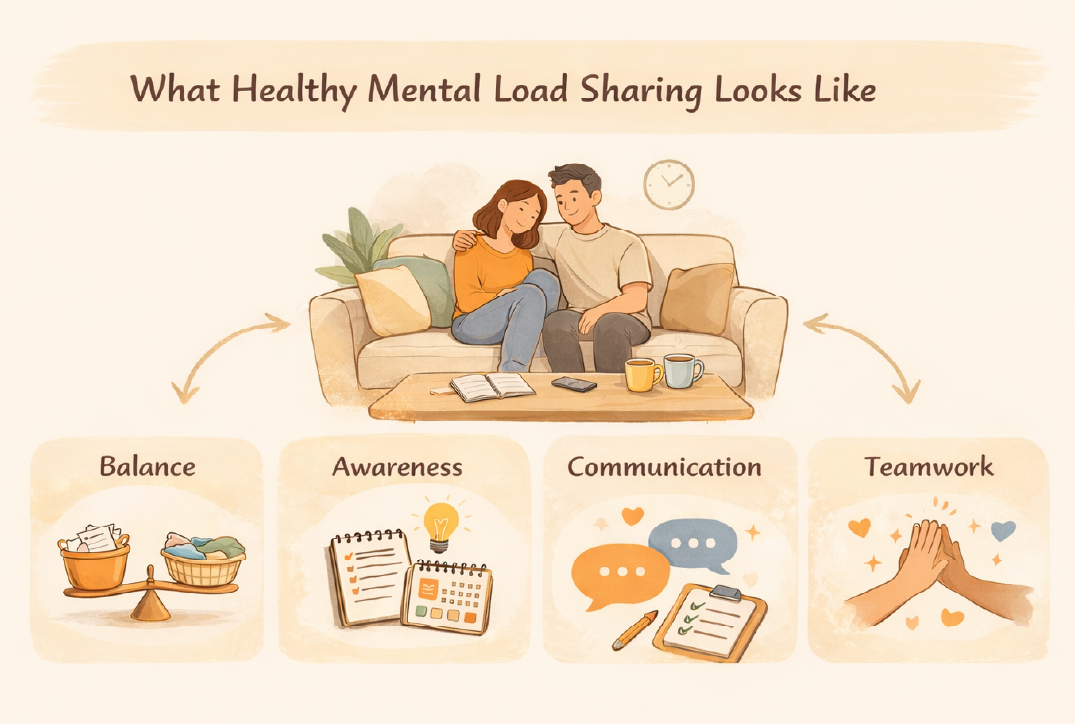
Because managing mental load isn’t about keeping score, it’s about feeling supported, seen, and understood.
Mental load isn’t always visible, but its impact is deeply felt. It shows up in the constant thinking, the quiet responsibility, and the feeling of always being “on.” And while carrying it can be exhausting, what makes it heavier is feeling like no one else really sees how much you’re carrying.
The truth is, this isn’t about who does more. It’s about feeling supported, valued, and understood to strike balance in partnership.
And that starts with a conversation. Not a perfect one, but an honest one. One where both partners are present, willing to listen, reflect, and find a better way forward together.
Because when mental load is shared, it doesn’t just reduce stress. It strengthens the relationship.
Struggling to explain what you’re carrying? Join the Aligna Beta Community and get access to our free tools, conversation guides, and mental load frameworks, designed to help you feel heard, supported, and understood.
Sign up for free and take the first step toward better balance