

The Mental Load Doesn’t Go Back to School. It Just Changes Shape.
Back-to-school may feel like a fresh start, but the invisible work of running a household never stopped.
Every August, people call back-to-school season the “Parents’ New Year.”
The comparison makes sense.
Calendars fill up. New routines begin. Families buy supplies, complete forms, and prepare for a different rhythm of life.
But there’s one important difference.
Unlike New Year’s Day, mental load doesn’t begin with the school year.
It has already been running all summer.
Back-to-school doesn’t create mental load.
It simply changes its shape.
Mental load is the invisible work of anticipating, remembering, deciding, planning, and monitoring everything a household needs. It’s the thinking behind the doing and it rarely takes a season off.
Before the first school email arrives, many parents are already asking themselves:
- Who needs new shoes?
- Has the bus schedule changed?
- Which forms are due first?
- How will after-school care work this year?
- Which child is excited and which one is quietly anxious?
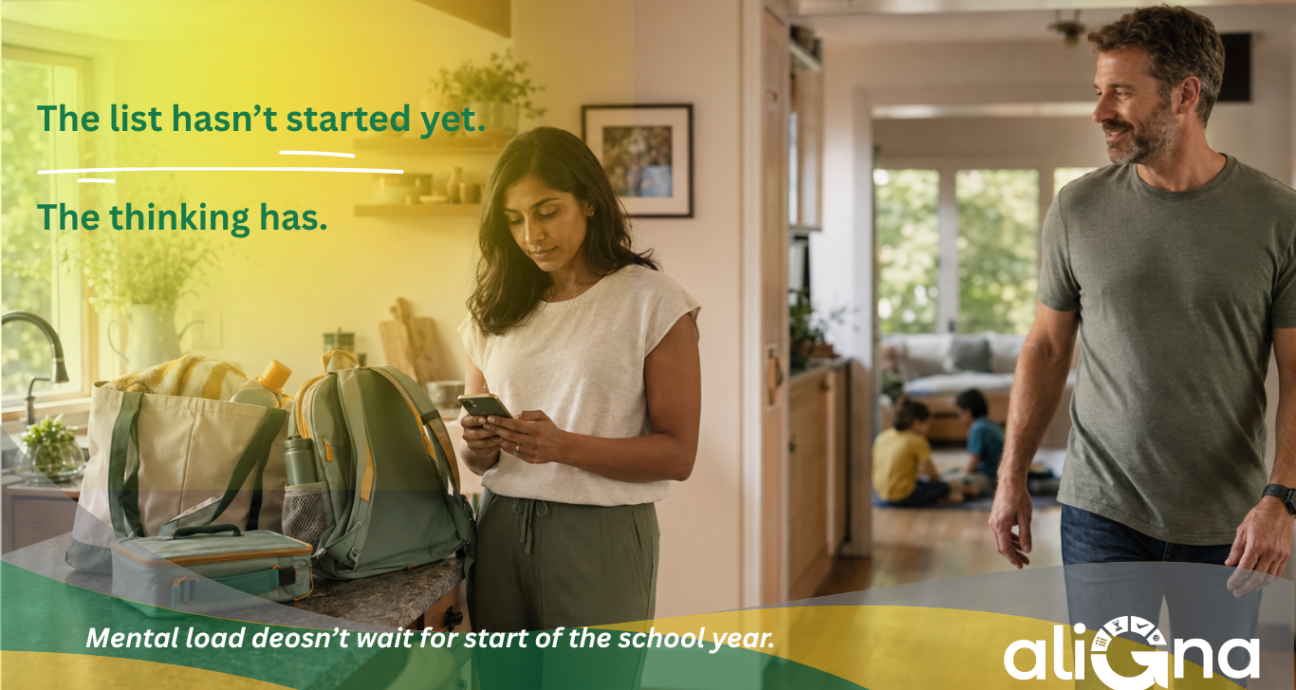
The backpacks may still be empty.
But the mental checklist has already begun.
Why Back-to-School Feels So Overwhelming
The hardest part isn’t the checklist.
It’s everything the checklist doesn’t show.
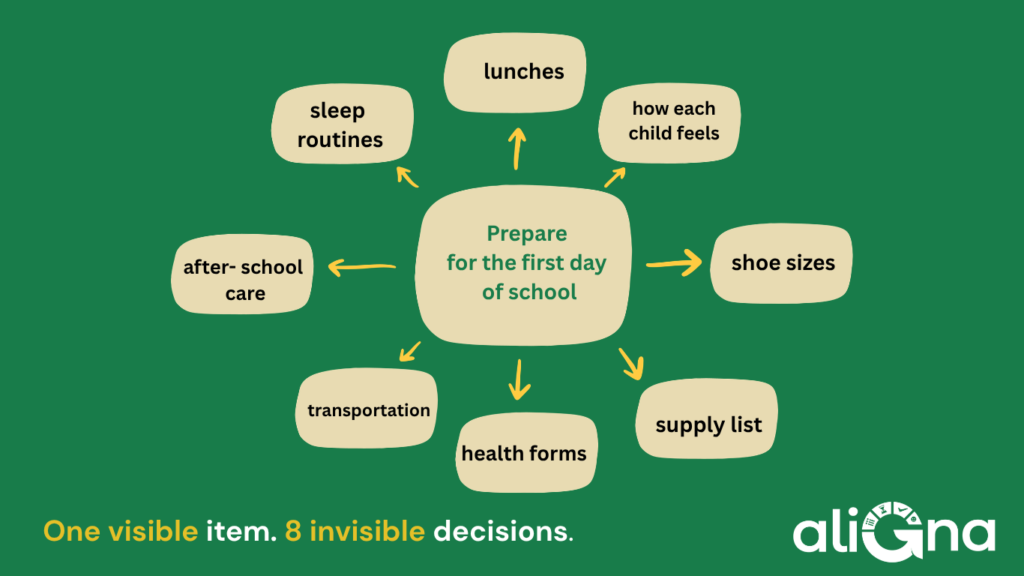
“Prepare for the first day of school” sounds like one task.
In reality, it includes:
- Checking clothing and shoe sizes
- Finding the school supply list
- Completing health and permission forms
- Coordinating work schedules around drop-off and pickup
- Planning lunches and after-school care
- Adjusting bedtime routines
- Remembering teacher communication
- Noticing how each family member is feeling about the transition
The visible tasks are only half the story.
Behind each one is invisible work: anticipating problems, making decisions, remembering details, and keeping everyone moving in the same direction.
When all of that lives in one person’s head, the school year can feel exhausting before the first bell even rings.
A Different Way to Think About Mental Load
We almost published this article under a different title:
“When Summer Ends, the Mental Load Goes Back to School Too.”
Our founder, Reddhi Patel, challenged that idea.
“Mental load takes a different shape at different times of the year. But it never begins and it never ends. Summer, school year, holidays. It doesn’t go anywhere. It just looks different.”
That distinction changes everything.
If mental load only appeared in September, families could prepare for it and recover afterward.
But it doesn’t arrive.
It’s already there.
Summer asks you to remember camp registrations, sunscreen, vacations, and childcare.
School asks you to remember permission slips, bus routes, homework, activities, and earlier mornings.
Different season.
Same invisible work.
Why Invisible Work Is So Hard to Share
People notice packed lunches.
They don’t notice someone remembering to buy bread two days earlier.
People see permission slips signed.
They don’t see someone remembering where they were tucked inside a backpack.
The challenge isn’t that families don’t share tasks.
It’s that invisible work often stays invisible.
And it’s difficult to share responsibility for work that no one else can see.
Share Ownership, Not Just Tasks
Back-to-school doesn’t have to mean one person becoming the family’s operating system.
Instead of asking, “What needs to get done?”
Start by asking:
What does our family need to notice, remember, decide, and coordinate over the next month?
Making invisible work visible is the first step toward sharing it.
Then move beyond assigning errands.
There’s a difference between helping and owning.
Helping sounds like:
“Tell me what to do.”
Ownership sounds like:
“I’ll take complete responsibility for lunches.”
“I’ll own transportation.”
“I’ll manage after-school activities.”
Ownership means noticing what needs attention, planning ahead, following through, and adapting when plans change without waiting to be reminded.
Tasks can be delegated. Ownership cannot.

A 20-Minute Family Reset
Before the school year begins, spend twenty minutes together asking four questions.
- What’s changing this year?
- What might feel difficult?
- Who owns each area completely?
- How will we ask for help when we need it?
Don’t make the conversation only about logistics.
Talk about feelings too.
A child who’s resisting school may be feeling uncertain, not defiant.
The same can be true for adults.
How a household runs and how a family feels are part of the same conversation.
The Goal Isn’t a Perfect First Week
Back-to-school often comes with pressure to get everything right immediately.
Perfect lunches.
Perfect schedules.
Perfect routines.
But families don’t thrive because every day goes according to plan.
They thrive when responsibility is visible, communication is open, and no one is quietly carrying the entire household alone.
Back-to-school may feel like a parent’s new year.
But mental load doesn’t get a fresh start.
It simply changes shape.
Frequently Asked Questions
What is mental load?
Mental load is the invisible cognitive work of anticipating, remembering, planning, deciding, and monitoring everything needed to keep a household running. Unlike chores, much of this work happens before any task is visible.
Does mental load increase during back-to-school season?
Not necessarily. The mental load doesn’t become heavier. It becomes more structured. Flexible summer planning is replaced by fixed school schedules, deadlines, communication, and routines.
Why does back-to-school feel more stressful than the checklist suggests?
Because the checklist only captures visible tasks. It doesn’t capture the thinking behind them: remembering deadlines, coordinating schedules, anticipating problems, and managing everyone’s needs.
What’s the difference between sharing tasks and sharing ownership?
Sharing a task means completing one action. Sharing ownership means taking responsibility for noticing, planning, doing, and following through without someone else having to manage the process.
About Aligna App
Running a household isn’t just about completing tasks. It’s about carrying the invisible work behind them.
Aligna helps families make that invisible work visible, clarify ownership, and share responsibility more intentionally, so no one has to become the operating system for the entire household.
Join the Aligna Beta Community at usealignaapp.com and help us build a calmer, more connected way to run family life.
Explore More on Mental Load
If this article resonated with you, you may also enjoy:
- Mental Load vs. Physical Chores and Why is One Harder to Share: These terms are often used interchangeably, but they describe different kinds of invisible work.
- How Shared Household Management Strengthens Relationships?: Practical ways to move beyond “just tell me what to do.”
- How does mental invisible load affect men and women?: A closer look at the cognitive work and how it impacts men and women differently.
- How to Plan Your Month as a Family (Without the Last-Minute Panic): Build a monthly planning system your whole family can actually see and follow.